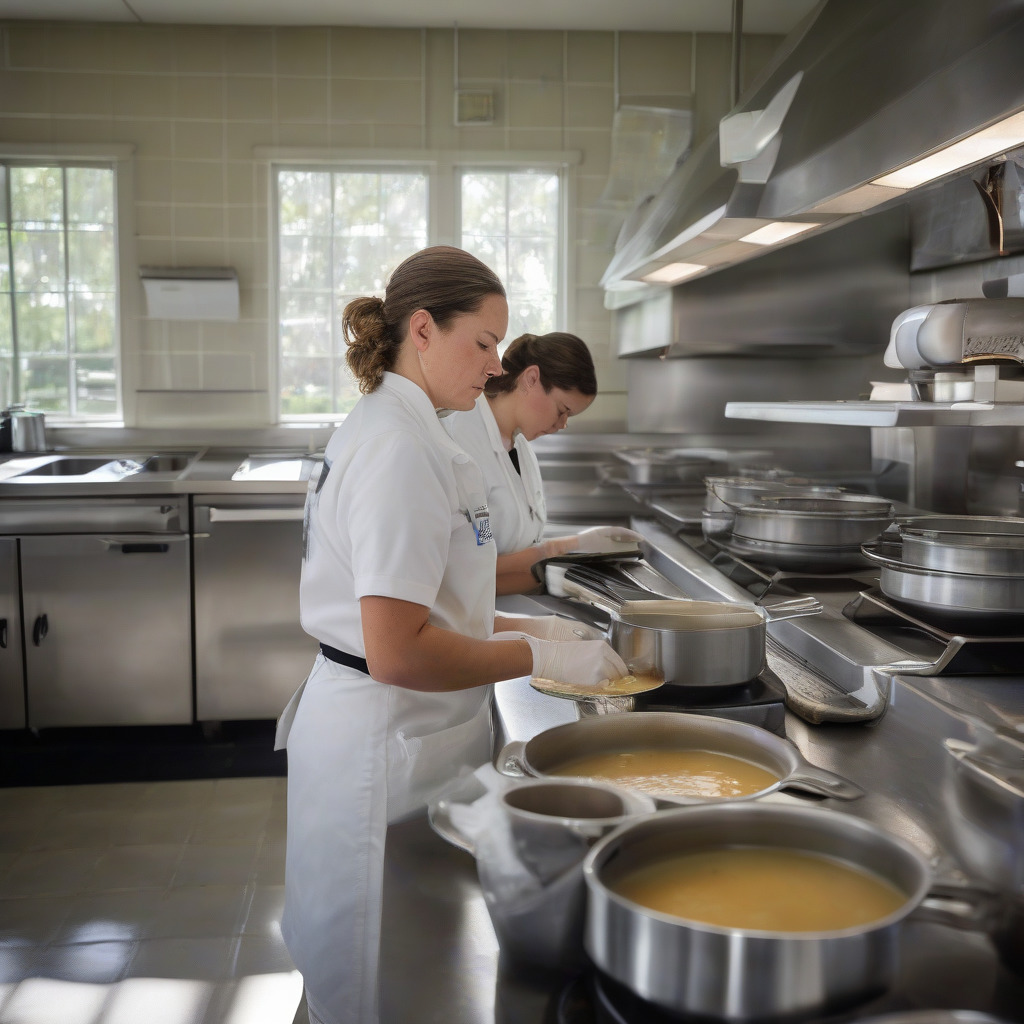
What Orlando Restaurant Workers Actually Take Home One Year After the Minimum Wage Increase
Service charges, restructured tip pools, and quiet hour cuts are shaping whether the wage floor rise reached workers' wallets or stopped at the host stand.

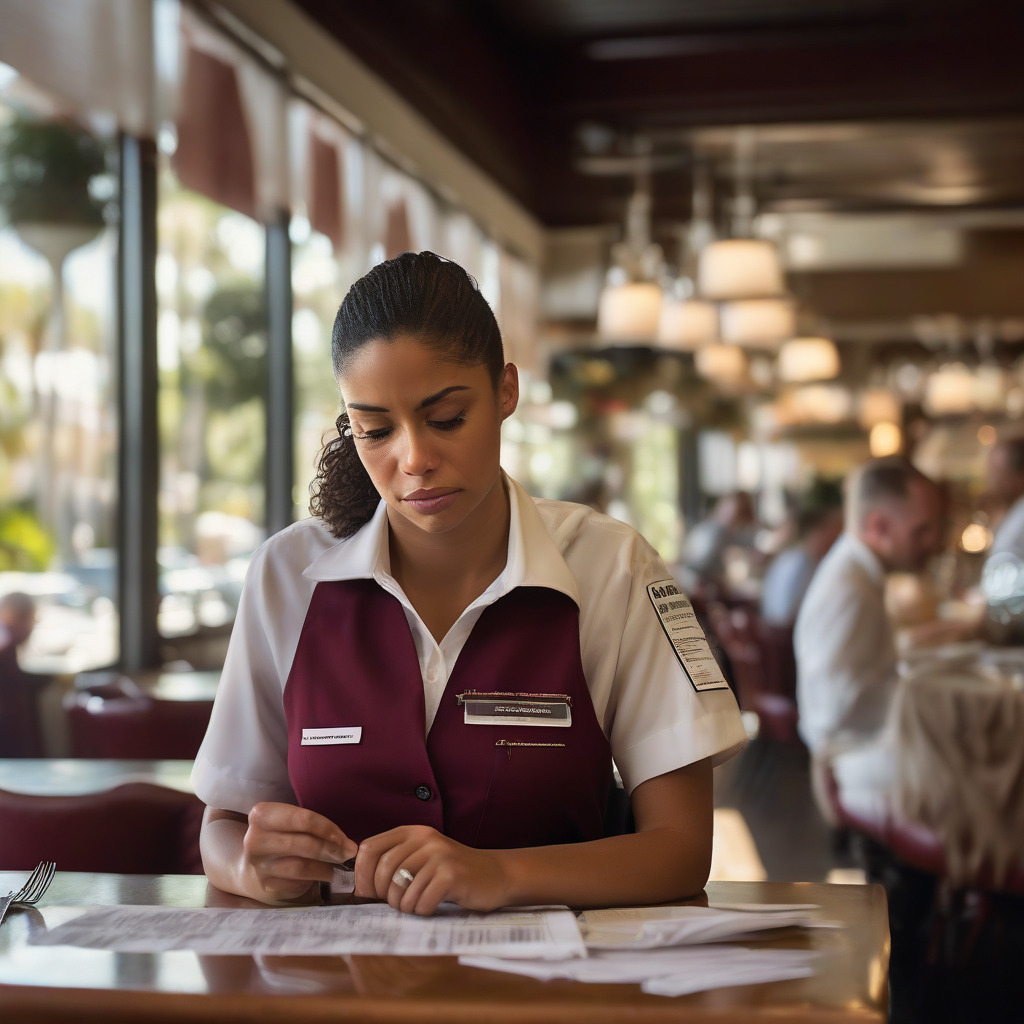
Service charges, restructured tip pools, and quiet hour cuts are shaping whether the wage floor rise reached workers’ wallets or stopped at the host stand.
On the last Friday of September 2025, Marisol Vega expected her paycheck to reflect something she’d been waiting on for several years. Florida voters had approved Amendment 2 back in 2020, and the escalator had been climbing—$12, $13—on its way to $15. On September 30, 2025, the tipped minimum ticked to $10.98 per hour and the general minimum hit $14.00. Vega, a server at a full-service restaurant near Thornton Park who agreed to be identified by her first and middle names to protect her job, had done the math on her phone before her shift started.
Her check told a different story.
“The hourly went up, yes,” she said. “But we had a new service charge added in July. So now I’m getting a cut of that, but it goes through payroll, which means taxes come out before I see it. My tips dropped because people see the eighteen percent on the bill and think they already tipped. I am actually taking home less than I was last October.”
Marisol’s experience isn’t universal, but it’s not an edge case either. CityDesk Orlando spent six weeks talking to servers, bartenders, line cooks, and operators across I-Drive, Mills 50, Downtown, Thornton Park, and Winter Park to answer the question our four-part wage-increase series never fully closed: did the paycheck on Friday actually get bigger?
It depends entirely on decisions made behind the host stand.
The Number That Actually Matters Is Not the Hourly Rate
A tipped server working 30 hours a week at the old tipped minimum of $9.98 per hour would clear $299.40 in base wages per week. At the new $10.98 tipped minimum, that same server earns $329.40 in base—a $30 difference—before tips. Real money.
Now layer in a mandatory 18-percent service charge. If the restaurant does $4,000 in covers on a Thursday and 30 percent of that flows through Marisol’s section, that’s roughly $216 in service charge collected from guests who, in a traditional model, would have left tips voluntarily. The service charge goes to the employer first, gets redistributed per house policy, passes through payroll withholding, and arrives at Marisol’s direct deposit as wages. Social Security, Medicare, and income tax get extracted before she sees it.
A traditional tip arrives without employer withholding. The worker controls their own tax reporting at year-end.
For a back-of-house line cook working 40 hours at the prior general minimum of $13.00 per hour—a position exempt from tip credits—the increase to $14.00 is straightforward: roughly $2,080 more per year before taxes. No service charge redirection, no tip pool variable. The math is clean, and for kitchen workers, the wage law delivered nearly its full stated value.
Bartenders face the most volatile situation. A bartender on a busy Saturday at a Downtown bar generating $3,000 in bar sales at 18 to 20 percent tipping could see $540 to $600 in tips on a single shift. If a service charge replaces that tipping behavior even partially, and if a tip pool now requires sharing with back-of-house positions the employer had previously excluded, a bartender’s Friday check can fall even as the minimum wage rises. The wage goes up on paper; the deposit goes down in practice. That’s the trick.
A Tip Belongs to the Worker. A Service Charge Belongs to the House.
Most guests don’t know this. A lot of workers don’t either. And it’s the mechanism through which minimum wage gains can quietly disappear.
Under Florida law and controlling IRS guidance on tip versus service charge classification, a tip is a voluntary payment made by a customer directly to an employee. It belongs to the employee. The employer may facilitate a tip pool, but under the 2018 amendment to the Fair Labor Standards Act, if an employer takes a tip credit, tips cannot flow to the house or to non-tipped employees. If the employer pays full minimum wage to all workers, back-of-house employees may participate in a tip pool. Either way, employers cannot use service charge revenue to satisfy tip credit obligations.
A service charge is something else entirely. It’s mandatory, added to the bill by the restaurant, not offered voluntarily by the guest. Under IRS Revenue Ruling 2012-18, a mandatory service charge is income to the employer, not the employee. When the employer redistributes any portion of it to workers, that redistribution is classified as wages—Social Security, Medicare, and federal income tax all come out before the worker receives it. The employer also owes their share of FICA on those amounts.
Here’s what that means in practice. Two servers each receive $200 attributable to a table’s dining experience. Server A collected it as a traditional customer tip—it hits her pocket, and she reports it on her taxes at year-end. Server B’s $200 represents her allocated share of a mandatory 20-percent service charge. It goes through payroll, where withholding is deducted before she sees it. Same gross figure. Materially different net. Across a full working year, that gap can more than erase the dollar-per-hour minimum wage gain for a 30-hour-per-week worker.
Florida Statute 509.214 adds a state-level disclosure layer. Any operator collecting a service charge must include a statement on the menu specifying whether that charge is distributed to employees. Notably, the statute does not require that the charge go to employees at all—only that the menu tell you which is the case. That’s the whole protection. Read it and decide for yourself whether it’s enough.
What Orlando Restaurant Menus Actually Say, and What They Don’t
CityDesk reviewed menus at more than 20 Orlando-area restaurants with active service charges and reached out to operators in every major dining corridor. Disclosure quality varies sharply by ownership structure and timing.
The Osprey Tavern in Baldwin Park has carried a service charge for years. Its menu language indicates distribution to “all team members.” Owner Brandon Farris confirmed that the model includes back-of-house workers in the pool and that the charge predates the 2025 wage increase—it was part of a compensation restructuring during COVID that allowed the kitchen to retain cooks who otherwise would have left for theme park jobs. Farris was explicit about the business reasoning: when you can’t compete with theme parks on base wages during a crisis, a pooled model that shares good nights across the kitchen becomes a retention tool. That’s a real answer to a real problem.
On I-Drive, the picture is more uneven. Several corporate-affiliated properties—including restaurants under the Darden umbrella, which includes Olive Garden and LongHorn Steakhouse—have maintained traditional tipping structures as a matter of corporate policy, according to front-of-house workers interviewed at two locations. A manager at a Landry’s property on I-Drive, who spoke on background, said their compensation model was set at the corporate level and included no service charges, though tip-out percentages to support staff had increased in 2024.
Among independent operators in Mills 50 and Downtown, practices vary sharply. Two restaurants CityDesk visited had menu language that fell short of specificity under 509.214. One listed only “an 18% service charge is included” with no statement about distribution. A second described the charge as going to “our staff”—which doesn’t specify whether that includes back-of-house, excludes management, or covers the full amount or just a portion. Vague enough to mean almost anything, and legally that vagueness is a problem.
Operators who spoke on record were candid. “We added the service charge in January 2025 specifically because the September increase was coming and we needed a mechanism to raise kitchen wages without just losing the servers to fund it,” said one Mills 50 operator who asked that the restaurant not be named. “The service charge gives us control. The tip system gave the servers control. Those are different things, and I’m going to be honest that it was partly a business decision, not purely an equity decision.”
That’s worth sitting with. The service charge model isn’t inherently unfair—but it does shift economic control from the worker to the employer in ways that the hourly wage increase does not. That’s a real tradeoff, not a technicality.
The Wage Law Helped Cooks. The Service Charge Can Hurt Bartenders. That Internal Tension Is Real.
The case for service charges holds real weight. Kitchen workers have historically been underpaid relative to dining room workers. In a tip-dependent model, their wages track minimum wage, not revenue. A busy Saturday night that generates hundreds of dollars in tips for two servers generates nothing extra for the two cooks who executed the food. The 2018 FLSA amendment gave operators the legal tool to include back-of-house workers in tip pools—but only when the employer pays full minimum wage to all tipped employees rather than taking the tip credit. Service charge adoption allows an operator to pay the full $14.00 general minimum to all workers, eliminate the tip credit, and pool the service charge revenue across front-of-house and back-of-house.
Marcus T., a bartender at a Downtown cocktail bar who agreed to speak with his first name and initial only, walked CityDesk through his numbers. Before a compensation restructuring in March 2025—which predated but clearly anticipated the September wage step—he was averaging $920 to $1,100 in weekly take-home on busy four-shift weeks, almost entirely from direct tips. After the bar added a 20-percent service charge and moved to a pooled model splitting 70 percent to front-of-house and 30 percent to back-of-house, his weekly take-home dropped to $740 to $850, depending on covers.
“I make more per hour on paper,” Marcus said. “The hourly went up a dollar. But the pool diluted everything, and the tax treatment killed the rest. My cook friends are doing better. That’s real. But nobody told me that my raise was coming out of my pocket.”
He’s not wrong about the math. He’s not wrong about the transparency either.
Jovita R., a line cook at a full-service restaurant near the Convention Center, confirmed the flip side. She clocked a $14-per-hour base beginning in October 2025, plus a share of the service charge pool that added roughly $60 to $80 per shift when the restaurant was busy. She estimated she was taking home $180 to $210 more per week than the prior October, accounting for taxes.
“It’s the best I’ve been paid cooking in Orlando,” she said. “I’m not going to pretend that’s not real.”
Kitchen workers gain. Servers and bartenders often lose, particularly in high-revenue environments. The wage law created a zero-sum dynamic inside the restaurant, and operators chose which side of that equation to favor. That’s not a criticism of any individual operator—it’s the honest shape of what the policy produced on the ground. For broader context on how Orlando’s dining sector is navigating these pressures, see our food & hospitality coverage of the region’s restaurant industry.
Have Operators Cut Hours to Offset the Cost?
The most direct way to offset a mandated wage increase without violating the law is to reduce hours. A worker earning $14.00 for 25 hours earns $350 before taxes. The same worker at $12.00 for 35 hours earned $420. Elementary math, and the lever is entirely in the operator’s hands.
The 2025 data covering the full effect of the $14.00 step isn’t yet fully reported. CityDesk submitted a records request to the Florida Department of Commerce for updated NAICS 722 Quarterly Census of Employment and Wages figures for Orange County, which was pending at publication. What workers described across multiple neighborhoods is consistent with what those figures would likely show: not simple layoffs, but hour dispersion.
“They added a sixth server to the floor on weekend nights,” said one Downtown server who asked not to be named. “So now my section is three tables instead of four, my tip income dropped proportionally, but I’m still there for the full shift. They spread the labor across more people so no one person gets overtime.”
Orlando’s seasonal dynamic amplifies this in ways statewide analyses routinely miss. October through March is the convention and winter tourism window—hours are abundant, the Orange County Convention Center runs three major events simultaneously, I-Drive restaurants turn tables at lunch. June through August is when hours contract, precisely when household expenses do not. Workers across multiple neighborhoods described summer 2025 as particularly tight. Covers were down from convention-season highs. The tourist mix shifted toward families on tighter budgets who tip less. Several operators quietly reduced server counts or moved to split-shift scheduling that shrank total hours without reducing the posted hourly rate.
“I didn’t lay anyone off in September,” one operator said plainly. “I just stopped calling people for the Tuesday and Wednesday shifts.”
That’s not illegal. It’s also not nothing.
Did Epic Universe Give Workers Any Leverage?
Universal’s Epic Universe opened May 22, 2025, drawing thousands of new workers into the Orlando hospitality labor market. Several restaurant operators confirmed the downstream effect.
“I had three cooks get offers from Universal in March and April,” said one I-Drive operator. “I matched what I could. One left anyway. The two who stayed know they have options now, and that changes how you talk about scheduling.”
A second operator in Winter Park said he had accelerated compliance with the September wage increase—offering $14.00 to all kitchen workers in July rather than waiting until October—because he was worried about retention given Universal’s recruiting. That’s worker leverage functioning the way it’s supposed to.
UNITE HERE Local 737, which represents hospitality workers at several hotel and theme park properties in the region, noted that density of alternative employment options tends to reduce workers’ tolerance for below-floor practices. Workers who know they can cross the street for a job are more likely to report underpayment or missing tip pool disbursements. Whether that’s producing more DBPR complaints in Orange County is unclear—a public records request for Chapter 509 complaints filed between October 2024 and September 2025 was pending at publication.
If the Money Isn’t Getting to You, Here’s What the Law Allows
Workers who believe their service charge has been collected but not distributed as disclosed—or that their tip pool is being operated in violation of FLSA—have five enforcement options. They vary considerably in speed and likely outcome.
Florida DBPR, Division of Hotels and Restaurants is the primary enforcement body for Florida Statute 509.214. If a restaurant’s menu doesn’t disclose service charge distribution, or if the operator’s practices don’t match what the menu states, file here first: myfloridalicense.com. The DBPR can investigate, issue citations, and refer licensing actions. Its jurisdiction covers the disclosure violation; it does not directly adjudicate wage theft.
The U.S. Department of Labor Wage and Hour Division, Tampa District Office handles FLSA tip pool violations—cases where an employer takes a tip credit while directing tips to back-of-house workers, or where a manager or supervisor participates in the tip pool. The Tampa office covers the Orlando metro. File at dol.gov/agencies/whd or call directly. WHD investigations are free and can result in back wage recovery plus liquidated damages.
The Florida Attorney General, Consumer Protection Division has jurisdiction if a service charge is represented to the guest as going to workers and does not, which creates a potential consumer fraud angle alongside the wage issue. The AG office accepts complaints online.
Private FLSA civil action is also available—workers can sue in federal court without first filing an agency complaint. A wage-and-hour attorney can evaluate whether the facts support a claim and whether a collective action covering multiple co-workers is viable.
The Florida Justice Association maintains a referral network for workers trying to identify which of these routes fits their situation.
All five pathways exist in law. They differ dramatically in speed, public visibility, and whether they’re likely to address the full scope of what went wrong. For most workers, the DBPR and WHD routes are the fastest first steps.
What Workers and Operators Should Know Before September 30, 2026
The final step under Amendment 2 lands in just under a year: $15.00 per hour general minimum, $11.98 per hour tipped minimum, effective September 30, 2026. Most operators are already running the numbers.
Several said they were considering raising existing service charges—currently at 18 or 20 percent—or extending them to categories not previously covered, such as takeout orders or large parties. One Downtown operator said he was modeling a flat 22-percent service charge to fully replace tip income and convert all workers to W-2 employees with benefits. That model requires high average check sizes and careful menu disclosure language under 509.214. It can work, but it doesn’t work everywhere, and it’s not obviously better for workers than a well-run traditional tip structure.
The more straightforward offset is menu price increases. Two operators said they planned to absorb the September 2026 increase primarily through a 3-to-4-percent across-the-board price adjustment, maintaining traditional tip structure. This is the most worker-friendly approach to cost absorption because it preserves tip income rather than redirecting it through payroll.
QR-code ordering and pay-at-table terminals continue to reduce reliance on full-service table coverage. At least two operators mentioned piloting reduced server-to-table ratios enabled by tableside technology—which effectively reduces front-of-house headcount needs without formal layoffs. Several operators were candid that they’d continue managing labor costs at the hours level rather than the headcount level, distributing fewer total hours in a way that keeps per-worker costs below overtime thresholds.
For workers, the most important thing to understand before October 2026 is the specific structure of your compensation arrangement right now. If your employer has a service charge, the menu is legally required to say how it’s distributed. If it doesn’t, that’s a violation of Florida Statute 509.214 and worth a complaint to DBPR—no exceptions. If your tip pool includes managers or supervisors, that’s an FLSA violation regardless of the minimum wage level. If your scheduled hours were systematically reduced around the pay period when the wage increase took effect, document it. The patterns are visible in real time if you know what to look for. For a ground-level look at what prices workers and guests are actually navigating, what Orlando happy hour drinks actually cost in June 2026 captures what the shift to service charges looks like from the other side of the bar.
What Happened to Marisol
One year after the September 30, 2025 increase, Marisol Vega is still running her section near Thornton Park. She’s not earning less than the law allows. She’s earning less than she expected. The distance between those two things is the story the wage policy debate consistently fails to tell.
The wage floor rose. Every tipped worker in Florida is guaranteed at least $10.98 per hour, and every cook in an Orlando kitchen is guaranteed $14.00. Those numbers are real. What’s equally real is that the gap between the posted rate and the actual Friday direct deposit has always been shaped by decisions operators make about service charges, tip pools, scheduling, and section sizes—decisions the law doesn’t dictate and that most workers don’t have much power to contest individually.
The policy moved the floor. Whether it moved what workers actually take home depends almost entirely on what the restaurant decided to do after the law changed. For cooks like Jovita, it worked. For bartenders like Marcus and servers like Marisol, it often didn’t—and they had no say in which outcome they got.
That’s not an accident of implementation. That’s the design.
CityDesk Orlando submitted records requests to the Florida DBPR for Orange County Chapter 509 complaint data and to the Florida Department of Commerce for updated NAICS 722 QCEW figures for Orange County. Both were pending at publication. Workers quoted in this piece were interviewed between August and September 2025; some are identified by first name or first name and initial to protect employment. Operators are identified by name where they agreed to be on record.