What Florida Sellers Must Disclose About Flood History When They Sell
FEMA zone designation tells you where water might go. Seller disclosure law tells you what actually happened. In Orange County, those two things are not the same. Right now, that gap matters more t…

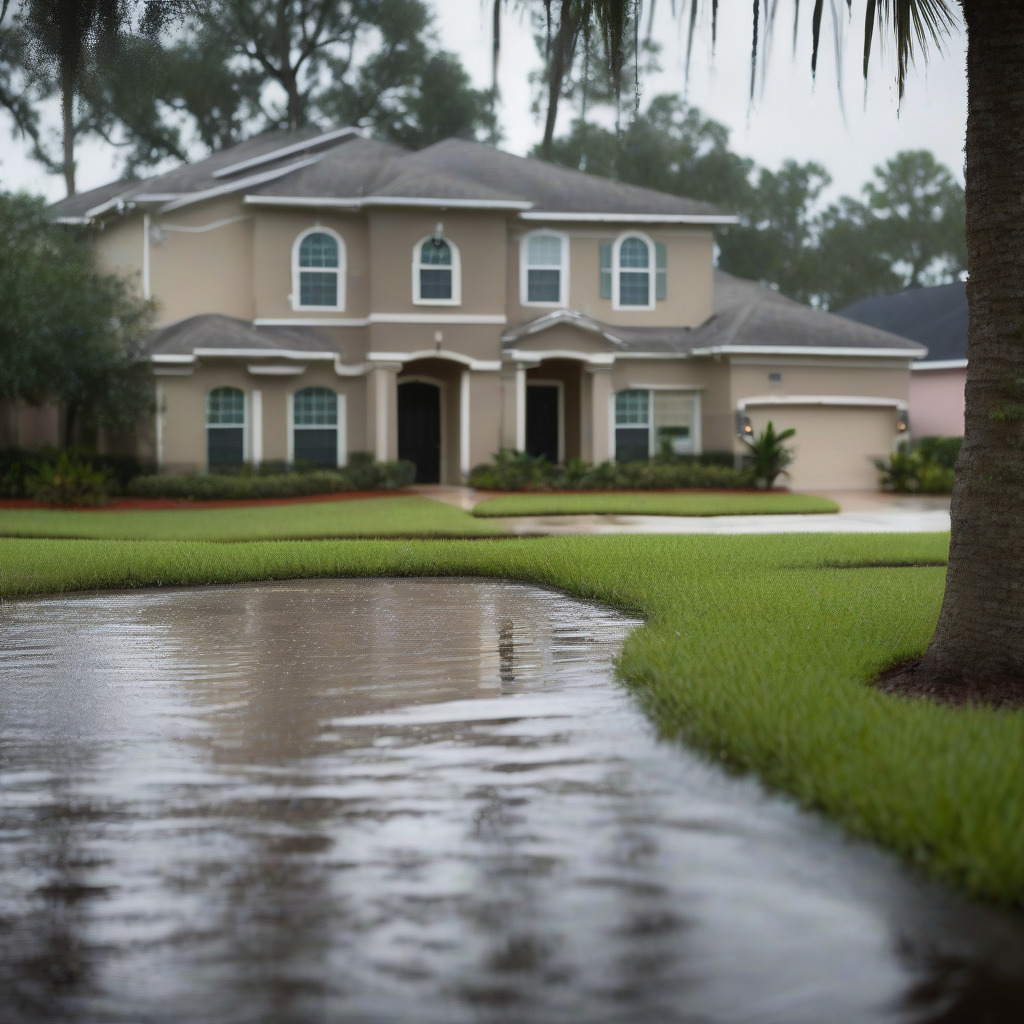
FEMA zone designation tells you where water might go. Seller disclosure law tells you what actually happened. In Orange County, those two things are not the same. Right now, that gap matters more than usual.
Editor’s note: Florida Statute 689.261 was amended in 2024. Readers should verify current statutory language at leg.state.fl.us before relying on any disclosure form. FAR disclosure form language should be confirmed at floridarealtors.org. FAR/BAR As-Is contract paragraph references should also be verified against the current published form.
The Post-Milton Window Is Open Right Now
Hurricane Milton made landfall on Florida’s west coast in October 2024 and moved across the state with enough force to flood basements, garages, and ground-floor living spaces in neighborhoods that don’t appear on any FEMA high-risk map. The storm surge stayed west of Orlando, but the rainfall didn’t. Orange County recorded significant flooding along Shingle Creek, in the Boggy Creek corridor, around the Conway chain of lakes, and in parts of Lake Nona where retention infrastructure was already under strain from a wet season.
What follows is predictable — and honestly, depressing in how predictable it is. Damaged homes get remediated, sometimes thoroughly and sometimes minimally, then return to market in the months after storm season closes. Some come back as investor flips. Others are listed by original owners who made repairs and considered the matter resolved. Either way, buyers going under contract on those homes between November and late spring are operating in the highest-risk disclosure window of the year.
This repeats after every significant storm. After Irma in 2017. After Ian in 2022. Now again after Milton. The problem isn’t that sellers are uniformly dishonest. It’s that the law surrounding what sellers must disclose is widely misunderstood — by sellers, by some buyers’ agents, and occasionally by the sellers’ agents themselves.
The specific misconception driving the most post-closing litigation in this market is particularly stubborn: that a home not designated in a FEMA Special Flood Hazard Area carries no flood disclosure obligation. That is wrong. Florida courts have said so clearly. And yet here we are.
A FEMA Flood Zone Is Not a Flood History
FEMA flood zone maps, searchable at FEMA’s Flood Map Service Center, are statistical risk models built on historical rainfall data, elevation surveys, drainage studies, and hydrological projections. They tell you the modeled probability that a given area will experience a “100-year flood event” in any given year. A Zone X designation — the most common across large swaths of Orlando — means FEMA has calculated that the area has less than a 1% annual flood probability. It does not mean the property has never flooded. It does not mean it won’t flood next June.
In Orange County, the gap between FEMA designation and lived reality is especially sharp. Florida’s flat topography means rainfall accumulates rather than drains. The metro area receives more than 50 inches of rain annually, most of it concentrated between June and September. Neighborhoods in Windermere, Dr. Phillips, College Park, and significant portions of Winter Park sit in Zone X or along Zone AE borders, yet many experience routine water intrusion during heavy rain. Why? Localized drainage failures. Aging stormwater infrastructure. Proximity to lakes, retention ponds, and natural drainage corridors that FEMA’s models don’t capture at the parcel level.
The essential distinction is this: FEMA maps tell you about aggregate regional risk. Seller disclosure law addresses what actually happened to this specific structure, on this specific parcel, during the years the seller owned it. Those are two different questions. Only one can be answered by a public records search. Buyers conflate them constantly, and sellers who want to conflate them are grateful when they do.
What Florida Law Actually Requires Sellers to Put in Writing
Florida’s seller disclosure obligation on flooding runs on two tracks simultaneously, and they point in different directions.
Track One: Florida Statute 689.261
Florida Statute 689.261 requires sellers of residential property to provide buyers with a written disclosure notice addressing specific flood-related facts before or at contract execution. As amended in 2024, the statute addresses whether the property is located in a Special Flood Hazard Area, whether the buyer may be required to carry flood insurance as a lender condition, and whether the seller has made prior flood insurance claims on the property.
This is a standalone form requirement. It doesn’t get buried in the general purchase agreement. It’s not satisfied by a verbal conversation at a showing. The notice is separate, and its absence is a distinct legal problem with no exceptions.
[Verify exact 2024 amendment language at leg.state.fl.us before publication. The amendment’s specific provisions regarding prior claims and enhanced notice requirements should be confirmed against the enrolled bill text.]
Track Two: The FAR Seller’s Disclosure Form
The Florida Association of Realtors Seller’s Disclosure form contains specific line items covering known flooding and drainage problems, water intrusion into the structure, and prior water-damage insurance claims. These questions are distinct from the flood zone questions — and that distinction is where the most common seller confusion and subsequent litigation arise.
A seller who checks “no” on the flood zone questions because the property sits in Zone X may still be required to answer honestly on the water intrusion line items. Has the property experienced water intrusion into the structure? Are there known drainage problems on or affecting the property? Has the seller filed an insurance claim related to water damage? None of those questions depend on FEMA zone status. They track what the seller actually knows happened at the property.
[Verify current form number and exact line item language at floridarealtors.org. Exact question wording matters — confirm before publication.]
The most dangerous pattern in Orange County transactions is a seller interpreting Zone X status as permission to leave the water intrusion questions blank, or answer them “not applicable.” That interpretation is legally incorrect and actionable. An attorney in a post-closing dispute will pull the FEMA map, show it says Zone X, then ask the jury why the basement pump was running on a FEMA model. That is not a good moment for anyone.
Yes, the Obligation Applies in Zone X
The question buyers most often search — and most often get wrong — is this: Does a seller have to disclose past flooding if the home is not in a FEMA flood zone?
Yes. The Florida Supreme Court established this in Johnson v. Davis, 480 So.2d 625 (Fla. 1985), and it applies regardless of flood zone designation. Under Johnson v. Davis, a seller must disclose facts that (1) materially affect the property’s value or desirability, (2) are not readily observable by the buyer, and (3) are not known to the buyer. The court rejected the old “caveat emptor” framework for residential real estate in Florida.
Applied to flooding: a seller who has run a shop vac through their garage after every significant June rainstorm, who has watched their backyard retention area overflow, who knows the back bedroom smells of mildew in August — that seller has accumulated knowledge that is consequential to the property’s value, not readily observable from a brief walkthrough in February, and unknown to the buyer unless disclosed. Zone X designation doesn’t change any of those three factors.
The corridors where this gap is most acute in Orange County are specific. Holden Heights drains toward Shingle Creek and experiences localized flooding in heavy rain that FEMA maps don’t fully reflect. The Boggy Creek corridor has neighborhoods with chronic drainage issues tied to the creek’s basin. College Park’s older inventory sits near retention ponds built before modern stormwater codes. Horizon West, where residential development has outpaced stormwater infrastructure, has seen flooding complaints in subdivisions that were dry at the time of permitting. None of these risk factors appear in a Zone X search. All generate seller knowledge that Johnson v. Davis requires disclosure.
The As-Is Contract Does Not Do What Most Sellers Think It Does
This misconception generates more post-closing disputes in the Orlando market than almost anything else. Selling a home as-is does not eliminate a seller’s flood disclosure obligations.
The as-is designation in Florida real estate transactions, typically governed by the FAR/BAR As-Is Residential Contract for Sale and Purchase, modifies two specific things. It changes the inspection contingency structure, giving the buyer the right to inspect and cancel within a defined period. It changes the seller’s repair obligations — the seller isn’t agreeing to fix anything the inspection reveals. That’s what as-is accomplishes.
It does not modify the seller’s statutory obligations under Florida Statute 689.261. It does not override the common-law disclosure duty established by Johnson v. Davis. The FAR/BAR As-Is contract itself contains disclosure language that explicitly carves out known defects — its own text obligates sellers to disclose known facts affecting the property’s value. Undisclosed flood history creates liability from within the four corners of the contract the seller signed, not merely from external statute.
[Verify the current FAR/BAR As-Is contract paragraph reference, specifically the seller representation paragraph, before publication. The exact paragraph number may change with form updates.]
The transaction profile carrying the highest risk is the post-storm investor flip sold as-is to an owner-occupant buyer. A property remediated quickly after Milton — new drywall, fresh paint, clean carpet — and listed in the months that followed can pass a basic inspection with no observable red flags. Inspectors can only observe what is visible. The as-is designation limits a buyer’s ability to demand repairs after inspection. But it doesn’t protect the seller from a fraud claim if they knew about prior flooding and said nothing. The contract isn’t a shield. It’s a document that cuts both ways.
How to Research a Property’s Flood History Before You Make an Offer
No single database covers everything. Buyers need to work multiple sources in sequence, understanding what each one cannot show as clearly as what it can.
Start with FEMA’s Flood Map Service Center at msc.fema.gov. Look up the address, confirm the zone designation, and note which flood panel covers the parcel. Zone X tells you the modeled risk is low. It tells you nothing about what happened there in 2017, 2022, or 2024.
Next, pull the Orange County GIS system. The OCFL maps portal is genuinely underused — it’s the most overlooked tool in a buyer’s pre-offer checklist, and I’d put it ahead of the FEMA search for properties in flood-adjacent neighborhoods. Search the parcel and examine proximity to retention ponds, lakes, drainage easements, and stormwater infrastructure. Properties backing up to drainage easements or sitting at the low point of a subdivision warrant scrutiny even if FEMA says the risk is benign. Buyers working through what Orlando condo buyers must check before making an offer face a parallel version of this problem — HOA and building records can obscure prior water events just as effectively as a Zone X designation can.
The Orange County Property Appraiser’s website at ocpa.info holds permit history on every address. Run the permit history and cross-reference dates against known storm events. A permit for drywall replacement, flooring, or HVAC work filed in the months following September 2017, October 2022, or late 2024 is worth questioning directly. Permitted work means the county has a record of what was done. It doesn’t mean the full scope of damage was disclosed, or that all work was permitted.
A CLUE report — Comprehensive Loss Underwriting Exchange — contains up to seven years of insurance claims on a property, including water damage claims. Buyers can’t request a property’s CLUE report directly; only the current owner or their insurer can pull it. Two practical options: negotiate the CLUE report as a contract condition and require the seller to provide it within the inspection period (treat a refusal as a signal, because it is one), or ask your insurance agent what the property’s CLUE data shows when they run quotes during the contract period. Quoting insurers pull it to price the policy. The information is there.
The most labor-intensive tool is also the most underreported. Under Florida Statute 119, residents can request public records from county agencies at no or minimal cost. A records request to Orange County Stormwater Division asking for drainage complaints, flooding service requests, or stormwater inspections associated with a specific address can surface neighborhood-level flooding documentation that never appears in a permit file or insurance claim. Submit this early in the contract period — county response times vary, and inspection deadlines don’t wait.
What none of these tools surface is unpermitted remediation work. Drywall pulled and replaced without a permit. Carpet removed and re-laid without an insurance claim. Cash-pay repairs that left no contractor invoice in any county record. Claims never filed because the seller handled the damage out of pocket. Neighbor accounts are often the only way to find this history. A good buyer’s agent in the target neighborhood makes those calls before the inspection contingency expires. If your agent won’t knock on a neighbor’s door, that tells you something about your agent worth knowing. We track this type of reporting as part of our home & property coverage of consumer issues facing Orange County buyers.
What Happens if You Find Undisclosed Flood Damage After Closing
Buyers who discover undisclosed flood history after closing in Orange County have real legal options, but the window to act effectively narrows faster than most people realize.
Civil fraud and negligent misrepresentation are the primary claims. Florida’s statute of limitations for fraud is four years under Florida Statute 95.11, running from the date of discovery — not from closing. That sounds like a long runway. It isn’t always. “Discovery” in the legal sense means the point at which a reasonable person knew or should have known the damage existed. An attorney for the seller will argue that the first time your back bedroom flooded in June, the first rainy season after closing, was the discovery date. That starts the clock. Breach of written contract claims carry a five-year period under F.S. 95.11, running as a parallel track to the fraud claim.
A complaint can also be filed with the Florida Real Estate Commission at MyFloridaLicense.com if the seller’s agent had knowledge of prior flooding. FREC disciplines licensees, not sellers, so this doesn’t put money in a buyer’s pocket. But a sustained FREC finding can support the civil case by establishing that a licensed professional recognized the disclosure problem.
Most Central Florida undisclosed-flood-damage cases settle before trial. The typical trigger is the buyer’s first full rainy season — the first summer when they experience what the seller experienced every summer they lived there. Settlement value depends heavily on documentation: permit timing relative to storm events, CLUE data the seller possessed, neighbor testimony, remediation costs. Cases where the seller made cash-pay repairs that left no paper trail are harder to prove, but neighbor testimony that’s consistent across three or four accounts can carry significant weight.
One more thing: title insurance will not help. Title insurance protects against defects in the chain of ownership — gaps in the title record, undisclosed liens, prior ownership claims. What happened to the structure during the seller’s occupancy is outside the scope of any title policy. Buyers sometimes assume their title coverage extends to the physical condition of what they bought. It doesn’t. These are genuinely separate things.
What the Post-Milton Market Means for Orlando Buyers Through Spring 2025
Hurricane season ends November 30, and the market that follows is the most important consumer-protection window in Central Florida real estate each year. Storm-damaged inventory moves. Some moves transparently, with full disclosure and appropriately adjusted pricing. Some doesn’t.
The buyer most at risk isn’t the first-timer who asks careful questions. It’s the buyer who has done due diligence by FEMA’s standards — who looked up the flood zone, found Zone X, and concluded that flood history isn’t a concern. That buyer is using the wrong tool to answer the question they actually need answered. It’s an easy mistake when the FEMA search returns a clean result and everyone at the closing table seems relaxed.
Between now and late spring, Orange County buyers under contract on homes in the Shingle Creek drainage basin, the Boggy Creek corridor, the Conway chain adjacencies, older College Park inventory, or the newer Horizon West subdivisions should treat the disclosure package as an active investigative tool, not routine paperwork. A seller-provided CLUE report, complete and covering the full available history, is reasonable to request. Vague or blank answers on the FAR disclosure form’s water intrusion line items — the questions about known drainage problems and prior water damage claims, not the flood zone questions — are due diligence flags, not clerical oversights.
Florida law gives buyers substantially more ability to act than most realize, both before closing and immediately after. The common-law duty from Johnson v. Davis reaches Zone X properties. The statutory notice requirement under 689.261 creates a standalone paper trail obligation. Fraud and contract claims have limitations periods measured from discovery. But none of that is self-executing.
Evidence of prior flooding dries up — literally and figuratively. The neighbor who watched the seller pump out their garage in October 2024 may not remember clearly in October 2026. Remediated drywall is indistinguishable from original construction within a year. The window to build a strong case runs from contract execution to the first rainy season. After that, the facts remain true, but proving them gets harder every month. Start building the record now, before you close.
CityDesk Orlando covers Orange County real estate, business, and consumer issues for Central Florida residents. Statutory citations and form language in this article should be verified against current published sources before use in any transaction. This article is editorial coverage, not legal advice. Readers with specific disclosure questions should consult a Florida real estate attorney.