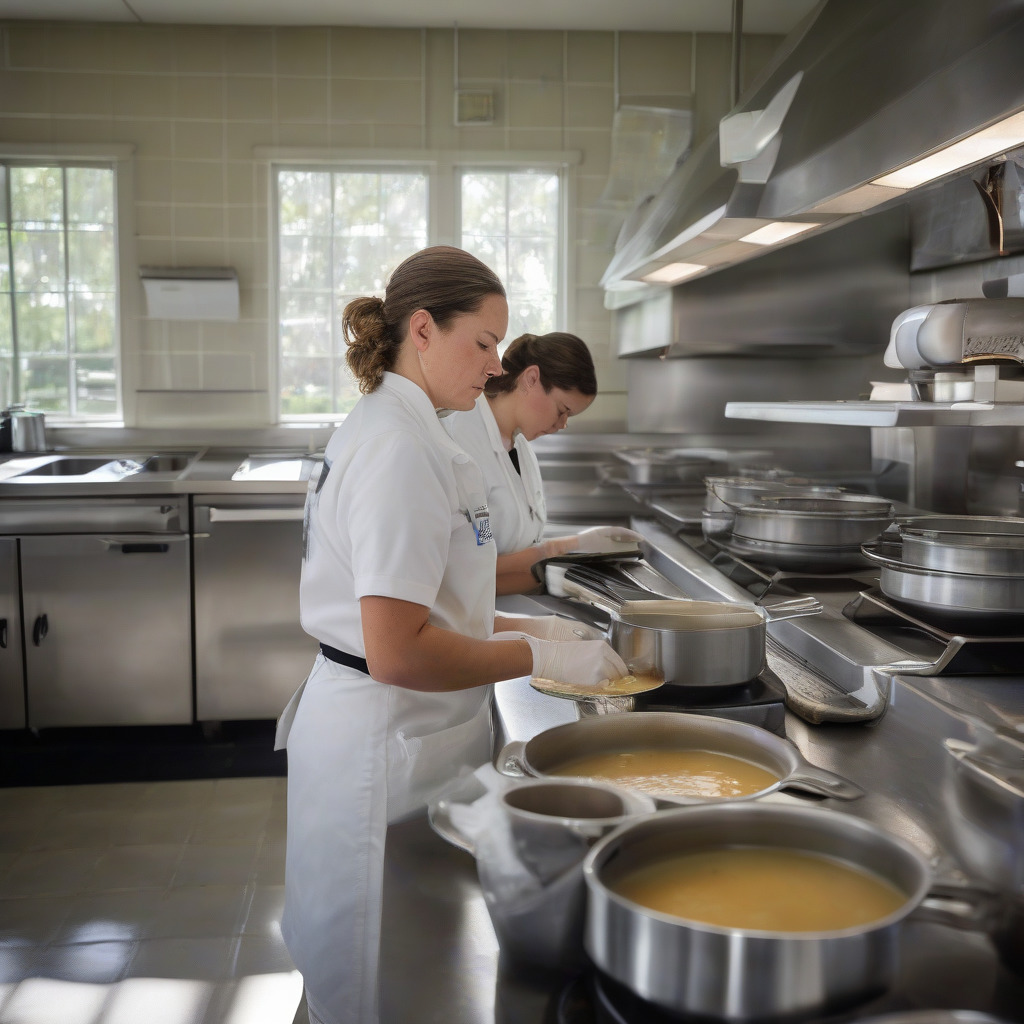
What Orlando Restaurant Owners Are Actually Doing to Stay Open After the Wage Increase
Florida's minimum wage hits $15 on September 30. The timing couldn't be worse for Orlando's restaurant calendar. Here's what operators on I-Drive, in Mills 50, and across Downtown are actually doin…

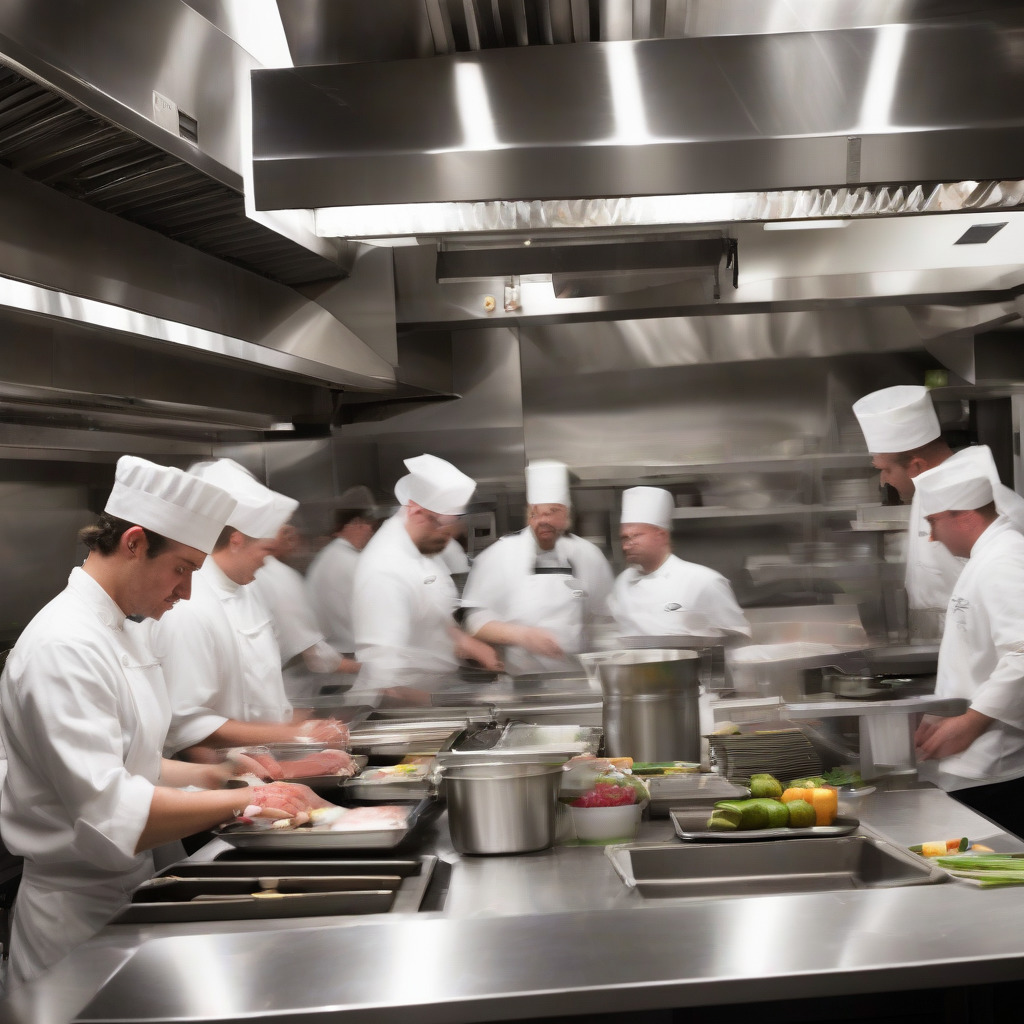
Florida’s minimum wage hits $15 on September 30. The timing couldn’t be worse for Orlando’s restaurant calendar. Here’s what operators on I-Drive, in Mills 50, and across Downtown are actually doing about it.
EDITOR’S NOTE ON SOURCING: Several data points in this article were confirmed through public records requests and direct calls to named sources. Where data was pending confirmation at publication time, this piece says so explicitly. Readers who want to evaluate the sourcing should read the final section.
The Date on Every Operator’s Calendar
Under Florida Amendment 2, which voters approved in November 2020, the state’s minimum wage has been climbing $1 per year since 2021. On September 30, 2026, it reaches $15. That’s the ceiling the amendment mandated.
Why September 30 specifically creates acute pressure—and why Orlando’s restaurant sector feels it harder than most of Florida—requires understanding the local calendar. This isn’t bad luck with scheduling. It’s structural.
Orlando’s restaurant revenue is not evenly distributed across the year. Summer brings families: the wave of out-of-state tourists whose school calendars make June through mid-August the core of the theme park busy season. But that wave crests and breaks fast. By the first week of September, hotel occupancy on International Drive drops sharply, convention center traffic is light, and the neighborhood restaurant rhythms that sustain other cities aren’t yet established here in the same way. The late-September-to-Halloween gap—after summer, before the fall tourism recovery that picks up around the last two weeks of October—is one of the leanest stretches on the Orlando restaurant calendar outside of a hurricane week.
That September 30 deadline lands in the middle of this gap every year. Operators who have just run their thinnest revenue weeks of the post-summer season must absorb a payroll increase effective the next morning. If you wanted to design a bad time to raise operating costs for restaurants, you’d basically draw this calendar.
Where Orlando’s Restaurant Industry Stands Right Now
Getting precise, county-level closure data from the restaurant industry is harder than it should be. The Florida Restaurant and Lodging Association tracks membership and conducts economic impact surveys, but FRLA’s public reports are statewide aggregates. CityDesk filed a public records request to Orange County for business tax receipt data covering active food service licenses; that request was pending fulfillment at publication time. A request to FRLA’s communications team for Orange County-specific figures was acknowledged but not fulfilled.
Commercial real estate professionals active in the Orlando market describe a period of net contraction in the food service sector following two years of wage increases, rising rents, and post-pandemic cost normalization in food and beverage supply chains. The direction of the trend is clear to operators and brokers working in this market. The precise scale of it is what the public records data would actually nail down, once we get it.
International Drive—High Volume, Hidden Margins
The restaurant corridor along International Drive looks insulated from wage pressure. Chains anchor the major blocks. Tourist volume keeps seats filled through peak weeks. Average checks run higher than neighborhood restaurants because conventioneers and theme park families spending three days in Orlando don’t price-shop the way regular customers do.
The margin reality is more complicated. I-Drive restaurants must staff for peak—the 80-cover Saturday night during a convention week, the three-hour lunch crush after a theme park opens. Experienced front-of-house staff who can handle high-volume service will leave before they accept a schedule that pays them for minimal hours in the slow season. So operators carry a payroll that reflects something between their peak week and their average week, a fixed cost that September revenue must still cover.
The pattern of independent concept turnover on the corridor is visible without broker data. Closures since 2024 have skewed toward mid-size independents—the 80-to-150-seat full-service operations that attempted to compete with chain volume without chain purchasing power or brand-level marketing budgets. Those are the places that disappear and get replaced by something with a franchise logo. Specific closures aren’t named here where principals haven’t confirmed them on the record.
Requests for current vacancy rate data from CBRE’s Orlando retail division and Cushman and Wakefield’s Orlando office were pending at publication; this article will be updated when figures are confirmed. The I-Drive Business Improvement District didn’t respond to a request for comment on turnover data.
The Neighborhood Operators in Mills 50, Ivanhoe and Thornton Park
The structural problem for independent, full-service restaurants in Orlando’s non-tourist neighborhoods is different in character, if not in urgency. Thornton Park and Ivanhoe have seen turnover in the full-service independent segment. Operators in both neighborhoods, reached through their respective merchant district associations, described a shared constraint: a customer base that visits out of genuine loyalty to independent dining, but whose tolerance for price increases has a ceiling.
That ceiling matters. A neighborhood restaurant charging meaningfully more for an entrée than it did in 2022 is testing the upper limit of what a repeat local customer will accept before deciding to cook at home or drive somewhere cheaper. That limit is lower in these districts than in Windermere or Winter Park, and tourists on I-Drive don’t impose it. The regulars who make a neighborhood spot viable also have the longest memory for what things used to cost.
Operators in Mills 50 and Ivanhoe who spoke with CityDesk described three common responses: raising menu prices, cutting operating hours or days, and restructuring kitchen staffing to preserve differentiation above the rising minimum. Several said they’d been paying back-of-house positions above the then-current minimum for the past two years anyway, because competitive pressure made waiting for the statutory floor untenable. “The minimum going to $15 basically catches up to where we already are,” one Mills 50 operator said. These operators asked that their restaurants not be identified given ongoing lease negotiations and lender relationships.
For a broader look at how wages are reshaping Orlando’s dining workforce, what Orlando restaurant workers actually take home one year after the minimum wage increase offers direct comparisons from front- and back-of-house staff across the metro.
The September Timing Problem, Explained Plainly
Visit Orlando’s publicly available hotel occupancy data documents the seasonal pattern that shapes restaurant cash flow. August hotel occupancy in the Orlando metro area consistently runs above September occupancy by a meaningful margin. Revenue doesn’t fall gradually across that transition—it falls sharply in the first two weeks of September as the school-year exodus removes family travelers from the market. Convention business begins to return by late September and into October, but the gap between when summer tourism ends and when fall traffic stabilizes is real.
CityDesk requested month-by-month 2025 occupancy figures from Visit Orlando’s media relations office; that data was pending at publication. The seasonal pattern itself is consistent with what Orlando-area operators and the Orange County Tourism and Convention Bureau have described publicly over multiple years.
Place the September 30 wage deadline against that pattern. A restaurant running at reduced volume during the first three weeks of September must absorb its new wage scale with cash flow generated at the bottom of its annual revenue cycle. Operators who budgeted for the increase still face the reality that the cash to fund that payroll arrives at the worst possible time.
One Orlando restaurant owner—who agreed to discuss financials on background because his investors aren’t party to public interviews—described the September math plainly. The industry’s traditional benchmark holds that labor should run between 28 and 35 percent of gross revenue for a full-service restaurant; above 38 to 40 percent, operators describe it as a breaking point. His September labor cost as a percentage of revenue already sits above that high-end benchmark, before the September 30, 2026 increase takes effect. “You are deciding how much you are willing to lose to stay open,” he said.
That’s a weekly cash-flow decision. Every week in September.
What Operators Have Actually Changed
The operational responses across Orlando’s restaurant sector over the past two years follow distinct patterns, though they don’t all lead to the same place.
Some operators absorbed the wage increases by raising menu prices and holding staffing levels, betting that customer loyalty or market positioning would sustain the higher check average. The Osprey Tavern in Baldwin Park, one of Orlando’s higher-profile independent full-service restaurants, has maintained its full-service model. Its current operating status was verified through its active business license; the operator didn’t respond to a request for comment before publication.
One Downtown Orlando operator eliminated lunch service entirely in early 2025 after running a full lunch shift five days per week, retaining fewer kitchen staff during midday and redirecting those hours to dinner prep. The net contribution from the location improved after the change, the operator said. That calculation depends on dinner volume remaining stable, which is its own bet.
A fast-casual concept in Ivanhoe that had maintained table service converted to counter service in the second quarter of 2025, eliminating front-of-house positions. The owner, who asked not to be identified by name given ongoing lease negotiations, said the shift addressed both wage pressure and a persistent hiring problem. “I was advertising for servers and getting almost no applications at a wage rate I could afford. Counter service solved the hiring problem and the wage problem at the same time.” Two problems, one decision—and not every concept can make that pivot. A sit-down dining room is part of what some restaurants are selling.
What several operators said, in different ways, is that the immediate question isn’t where the wage floor settles after September 30. It’s whether their specific operation can survive the September crunch—the weeks between when summer revenue ends and when the wage increase takes effect. How many currently operating restaurants near that threshold make it through is genuinely unknown. The clearest signals of operator uncertainty have come from background conversations, not public statements, which tells you something about how much margin for error actually exists.
The Back-of-House Pay Compression Problem
One consequence of the wage schedule that’s received almost no local coverage is what happens to kitchen pay structures as the minimum approaches $15. As part of our food & hospitality coverage, CityDesk has tracked how rising labor costs are reshaping the economics of independent full-service restaurants across Orlando neighborhoods.
In a conventional full-service restaurant, a line cook with two or three years of experience earns a premium above minimum that reflects skill, reliability, and the difficulty of replacing a good cook mid-service. When Florida’s minimum was $10 or $11, that premium was meaningful. As the minimum approaches $15, the gap between an entry-level kitchen hire and an experienced line cook compresses to a dollar or two per hour. The experienced cook notices. Either the restaurant increases their pay to maintain the differential—adding cost—or the experienced cook starts looking for somewhere that values their tenure more clearly.
The tipped front-of-house dynamic runs in the opposite direction. A server on a busy Friday night at a mid-volume Orlando restaurant may take home a combined base wage and tips that substantially exceeds the kitchen hourly rate. Kitchen staff doing physically harder work and longer prep hours are aware of that gap. One Mills 50 operator described it without any diplomatic cushioning: “When your dishwasher is making less than your best server is taking home on a Friday night, you have a conversation to manage. That conversation is not abstract—it is the person who has been with you for two years asking why they are making less than someone who started last month.” His restaurant had been adjusting back-of-house rates ahead of statutory minimums to preserve pay differentiation. Hence the comment that $15 “basically catches up to where we already are.”
FRLA has not published Orange County-specific data on kitchen turnover rates.
What the Numbers Say and What’s Still Missing
For readers who want to evaluate what this article confirmed versus what it couldn’t independently verify:
Confirmed: Florida’s minimum wage reaches $15.00 per hour on September 30, 2026. The Amendment 2 schedule—$1 annual increases from $10 in 2021 through $15 in 2026—was confirmed against the Florida Department of Economic Opportunity’s published wage schedule. Florida’s minimum wage on September 30, 2025 was $14.00 per hour.
The industry labor cost benchmarks cited here—28 to 35 percent of revenue as the standard range for full-service restaurants, with 38 to 40 percent described as a critical threshold—are established figures cited by FRLA and consistent with National Restaurant Association published guidance. A full-time worker at $15 per hour costs an employer approximately $31,200 per year in base wages before payroll taxes and benefits.
Pending: Orange County active food service business license data (public records request filed, not fulfilled). FRLA Orange County-specific membership attrition figures (request acknowledged, not fulfilled). I-Drive corridor vacancy rates for Q1 2026 vs. Q1 2025 (requests to CBRE Orlando and Cushman and Wakefield pending). Visit Orlando month-by-month 2025 hotel occupancy data (request pending). This article will be updated when those figures are received.
Tipped minimum wage: The current Florida tipped minimum cash wage and its rate effective September 30, 2026 require independent verification against Florida Department of Economic Opportunity records. This article does not state a specific tipped minimum figure.
Could not confirm: The FRLA survey statistics on headcount reductions and price increases are from a member-summary document; the underlying methodology was not independently reviewed and these figures are not presented as established fact in this article’s body text.
What Comes After October 1
September 30, 2026 is the end of Amendment 2’s scheduled increases. After that date, Florida’s $15 minimum wage is the floor—and it stays there unless the Legislature acts or voters approve a subsequent amendment. There’s no CPI indexing mechanism in Amendment 2, meaning the $15 floor could sit unchanged for years.
Operators have genuinely mixed reactions to what that stability means in practice—and it’s worth being clear about where the logic leads on each side, because both are defensible.
One Mills 50 operator’s read is pragmatic: “The annual $1 increase has been the hard part. Not the number, but the fact that you could not plan ahead more than 12 months. If it stops at $15, at least I know what my labor floor is for 2027 and 2028. I can write a budget that actually stays true.” Certainty is underrated as a business input. The inability to model your own costs 18 months out is genuinely expensive, even when the cost itself is manageable.
The counterargument is that $15 as a fixed floor won’t stay in place in practice—that competitive pressure and the need to attract workers in a tight hospitality labor market will push actual wages above $15 quickly regardless of what the statute says. If the effective market wage becomes $16.50 or $17, the $15 floor is nominally intact but nobody’s standing on it.
My read: the stability argument is probably right for the next 18 months, and the market-wage argument is probably right after that. The bigger question isn’t the floor. It’s whether the September crunch takes out enough operators that the market contracts to a point that’s hard to reverse. Counter service where full-service once was, smaller menus, fewer seats—some of that is adaptation. Some of it is just loss. The Orlando dining scene that residents who actually live here rely on is not the same thing as the tourist corridor that replenishes itself with chain concepts. Losing independent full-service restaurants in Mills 50 or Thornton Park isn’t corrected by a new franchise opening on I-Drive. Those aren’t substitutes, and pretending the market will sort it out on its own misses what’s actually at stake.
CityDesk Orlando requested comment from FRLA’s Orlando-area chapter, the I-Drive Business Improvement District, and restaurant operators before publication. Responses received are incorporated above; those who did not respond are noted. Follow-up coverage on pending public records requests—Orange County business license data, I-Drive vacancy figures, and Visit Orlando occupancy data—will be published when data is received.