What Orlando's New Construction Buyers Need to Know Before Signing With a Builder
Lennar, Pulte, and KB Home are pushing hard to close Q3 units in Horizon West, Lake Nona, and beyond. Before you walk into a sales center this August, read the independent guide builders won't hand…

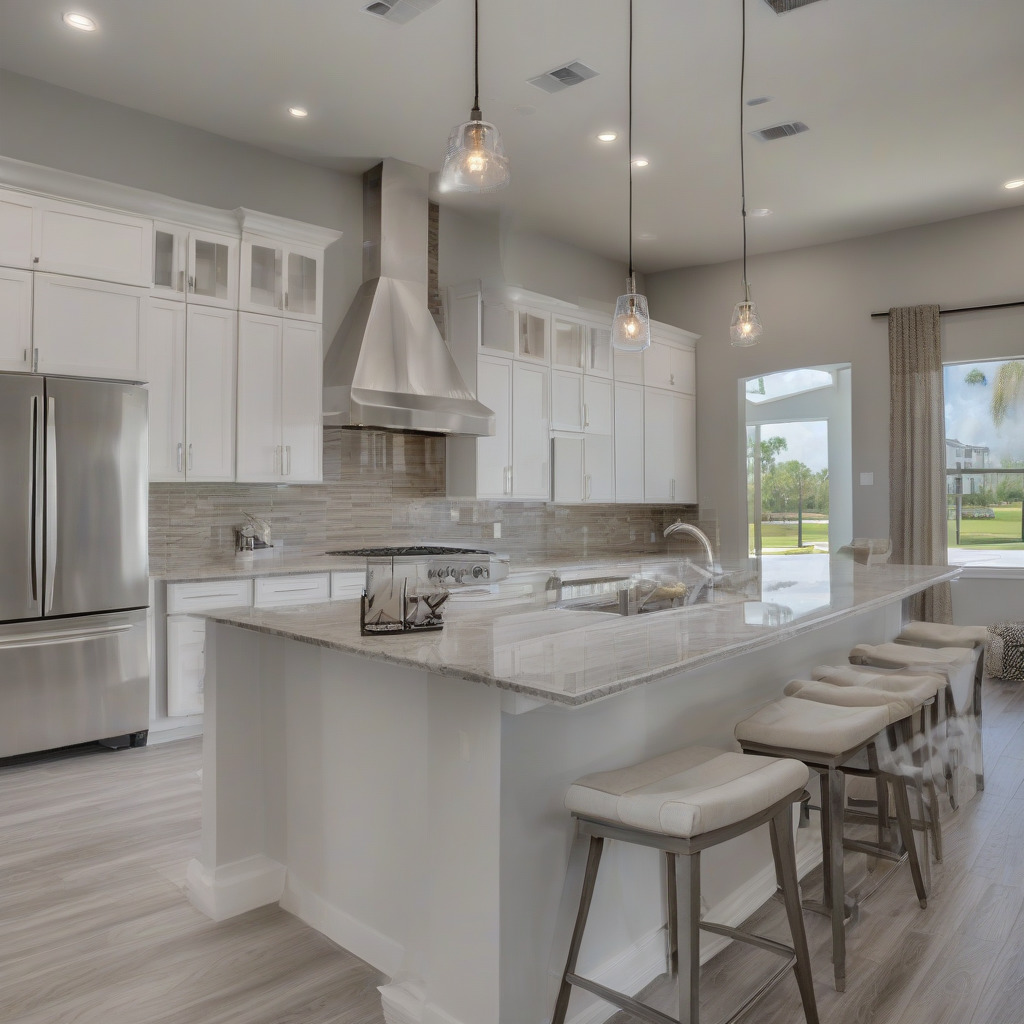
Lennar, Pulte, and KB Home are pushing hard to close Q3 units in Horizon West, Lake Nona, and beyond. Before you walk into a sales center this August, read the independent guide builders won’t hand you.
If you’ve walked through a model home in Horizon West or Laureate Park in the past few weeks, you’ve probably noticed something beyond the quartz countertops and the staged pantry organization. The sales rep was friendly but pointed. Questions about timelines got answered with urgency. “We only have two spec homes left at this price” came up early. The preferred lender incentive got mentioned before you asked.
None of that is accidental. Major production builders—Lennar, Pulte, KB Home, and others active across the Orlando metro—run on quarterly close targets, and Q3 ends September 30. August is when builder sales teams feel maximum pressure to convert traffic into contracts on homes that can realistically close before that deadline. For buyers, this is a moment of genuine advantage. But only if you understand what’s happening on the other side of the table, and what it’s going to cost you over the next decade.
Why August Is the Moment—and What Q3 Close Actually Means
Publicly traded homebuilders report closings as revenue. A home that closes October 2 doesn’t count toward Q3. That creates a hard incentive structure running from the C-suite to the division manager to the sales rep sitting across from you. The practical result: builder sales teams in August will move on things they won’t touch in February. Rate buydowns, design center credits, lot premium reductions, closing cost packages—these are live negotiating points right now.
But buyers routinely miss the catch. Not every home a builder shows you can actually close by September 30. Spec homes—units already under construction or nearing completion—are the only realistic Q3 candidates. A dirt-start home, or one in early framing, almost certainly cannot run through Orange County’s current permit-to-CO timeline in time. When a sales rep tells you a home “could close in Q3,” ask directly: what is the current construction stage, and what is the certificate of occupancy target date in writing? If the answer is vague, that’s your answer.
Before you sit down with a rep, look for phase maps that distinguish “move-in ready,” “under construction,” and “coming soon.” Only the first two categories are where Q3 close is possible. The third is a pitch for a future transaction dressed up as a September closing.
What a CDD Fee Actually Is and Where It Shows Up on Your Bills
Community Development District fees are probably the most misunderstood line item in Florida new construction. Builder sales materials do nothing to clarify this. That’s not entirely a coincidence.
A CDD is a special-purpose local government authorized under Florida Statute Chapter 190. Developers use them to issue bonds financing the infrastructure of a new master-planned community—roads, stormwater systems, utility lines, amenity centers, sometimes fiber. The bond debt is then repaid by property owners in the district over a multi-decade period, plus an ongoing operations-and-maintenance charge that doesn’t expire when the bond does.
The detail that trips up buyers: the CDD fee does not appear on your HOA statement, and it isn’t folded into your mortgage payment by default. It appears as a non-ad valorem assessment on your Orange County or Osceola County property tax bill, typically arriving in November. Unless you specifically ask your mortgage servicer to escrow for non-ad valorem assessments—many don’t do this automatically—you’ll receive a lump-sum bill for several thousand dollars at a time of year when you may not have the funds sitting there. A lot of buyers find this out in their first November. It is not a pleasant discovery.
Divide the CDD fee by 12 and add it to your PITI. It is a real, recurring cost of ownership. No exceptions.
What Specific Orlando Communities Actually Charge in CDD Fees
Generic articles about CDDs mention they exist. What buyers actually need are numbers. One caveat first: verify everything against current county records and community CDD budgets before you sign anything, because assessments change annually as bonds pay down and operations costs shift.
Laureate Park (Lake Nona) runs roughly $2,200–$4,500 per year depending on lot size and phase. The CDD here includes fiber internet infrastructure—a genuine offset for households that would otherwise pay separately for high-speed service. Even at the lower end, that’s $183 a month added to your carrying cost. Worth it for some buyers. Worth knowing for all of them.
Horizon West (Hamlin sub-districts) is where buyers most commonly encounter the dual-CDD problem. Hamlin has overlapping district structures where a buyer can find themselves in two separate CDDs simultaneously—a regional district covering shared infrastructure and a community-specific district covering local amenities. Individual fees run roughly $1,500–$3,200 per year, and buyers subject to dual assessments pay both. Verify specifically how many CDDs attach to any individual parcel before signing. This is not a paranoid question. It is a necessary one.
Storey Lake (Kissimmee/Osceola County) runs roughly $2,000–$3,800 per year. Storey Lake’s amenity center, lazy river, and related facilities were financed through the district—that’s what you’re paying for. If you’re buying there as a primary residence rather than an investment property, you’re still carrying that infrastructure cost, plus you’re living in a neighborhood built around short-term rental activity. The STR character is worth thinking hard about before you commit, separate from the fee math.
Sunbridge/Weslyn Park (St. Cloud, Osceola County) runs roughly $2,800–$4,200 per year, trending toward the higher end in early phases. The bonds are recent, the balances are high, and buyers are paying for roads and amenities that won’t be fully built for years. The fee should moderate as the bond pays down, but buyers purchasing now are at peak CDD cost in an incomplete community. That’s not a footnote. It’s a central fact about the purchase.
Pull the current CDD budget and the most recent tax roll from the county property appraiser’s website for the specific parcel you’re evaluating. The Orange County Property Appraiser’s online database allows parcel-level tax bill lookup. Verify before you sign.
The Preferred Lender Incentive—What You Get, What You Forfeit, and What Builders Can’t Legally Do
Every major production builder in Orlando operates an affiliated mortgage company, and every one of them will offer you a significant incentive to use it. The incentives are real. Whether they’re worth accepting is the actual question, and no one in that sales center has a financial interest in helping you answer it honestly.
Lennar’s Eagle Home Mortgage is currently offering closing cost packages in the $15,000–$25,000 range on Orlando-area communities, often structured as a combination of closing cost credits and a 2-1 rate buydown. That’s a temporary rate reduction of 2% in year one, 1% in year two, then the full contract rate from year three onward. The 2-1 buydown has been an aggressive marketing tool as rates have stayed elevated—it makes the first two years’ payments look much more affordable than they’ll actually be. Read that last sentence again before you get comfortable with the payment estimate on the sales center worksheet.
Pulte Mortgage is offering flex cash packages in the $10,000–$20,000 range, with some communities offering options to allocate a portion toward permanent rate buydowns—rate reductions that apply for the full loan term, not just the first two years. Permanent buydowns are generally more valuable to long-term owners. Ask specifically about the allocation options.
KB Home’s KBHS Home Loans is typically offering $10,000–$15,000 in credits, structured primarily as closing cost assistance.
On a $450,000 purchase, a $20,000 incentive is roughly 4.4% of the purchase price. If an outside lender offers a meaningfully lower rate on a 30-year fixed, that difference compounds. Whether the incentive or the rate savings wins depends on two things: how much better your outside lender’s rate actually is, and how long you plan to stay. Few buyers hold a 30-year mortgage to term. If an outside lender beats the preferred lender’s rate by a thin margin, take the incentive. If the rate gap is larger, the math flips. Get a competing quote from your own lender or broker before your final contract meeting. This step takes a day and can save you tens of thousands of dollars.
One thing builders cannot legally do: require you to use their affiliated lender as a condition of the sale. RESPA prohibits conditioning a home sale on use of an affiliated settlement service provider. What builders can do—and do—is condition incentives on preferred lender use. That’s legal. If a sales rep implies you have no choice, that implication is wrong.
What You Can Actually Negotiate in August—and What Builders Won’t Touch
Lot premium reductions are a genuine conversation in communities where inventory is sitting. Builders with a Q3 close goal will sometimes discount these, particularly on lots that have been sitting multiple quarters. Design center credits—upgrades at builder cost rather than retail markup, or outright credits toward a package—are another area of Q3 flexibility. Rate buydown structures, both 2-1 temporary and permanent point buydowns, are actively negotiable now.
Base price is a different story. It’s not stubbornness. A builder who drops base price on your unit creates a lower comp that can suppress appraisal values for neighboring pending sales in the same phase. Protecting base price protects the community’s entire sales trajectory. Builders know this and defend it almost universally. They will give you equivalent value in credits, lot premium reductions, and buydowns before they’ll touch the base price. Push there and you’ll hit a wall fast. Push everywhere else first.
Negotiating dynamics depend on where a community stands in its development. A nearly sold-out phase in a late-stage Laureate Park section gives the builder little reason to move. Scarcity is a real selling point. An early-phase community like Sunbridge, where the builder has years of lots ahead and faces competition from its own future inventory, may be more willing to work today.
The uncomfortable flip side of early phase: if builder incentives today will be surpassed by even better incentives six months from now, being in early phase is actually a negotiating disadvantage for the buyer. Sit with that before you sign.
What Florida’s New Construction Warranty Actually Covers—and the Exclusions That Bite
Florida Statute §553.84 and the standard warranty framework give new construction buyers a 1-year workmanship warranty, a 2-year mechanical systems warranty (HVAC, plumbing, electrical), and a 10-year structural defect warranty. The 10-year structural warranty sounds reassuring until you read the exclusions.
The dominant warranty program in Florida new construction is 2-10 Home Buyers Warranty. Under that program and standard builder contracts, sod and landscaping carry a warranty of 30 to 90 days from closing. If your sod dies in the Orlando summer heat at month four, it’s your problem and your cost. Appliances are covered only by the manufacturer’s warranty, not the builder’s workmanship warranty—and builders routinely don’t register appliances for you. Do it yourself, promptly after closing. Unregistered appliances can face reduced coverage.
Settlement drywall cracks under 1/8 inch are explicitly excluded under 2-10 HBW. Florida’s soil conditions and summer heat-and-humidity cycles make hairline cracking common in the first year. Buyers who assume these are warranty claims are usually wrong. Slab hairline cracks that don’t affect structural integrity are similarly excluded. Proving that a crack qualifies as a “structural defect” rather than cosmetic settling is a dispute that rarely resolves in the homeowner’s favor without documentation from closing day onward.
HVAC undersizing generates significant disputes in Florida. If your system runs continuously and never adequately cools the home, proving it was improperly sized at installation—rather than operated incorrectly—is a genuine fight. Document the system specifications at closing. Standing water and drainage issues after closing are another common dispute. Builders frequently argue that post-closing grading by the homeowner caused the problem. Photograph lot grade and drainage patterns immediately at closing, before you touch anything.
The procedural step buyers miss when they have a legitimate claim: Florida Statute §558 requires written pre-suit notice to the builder before filing any construction defect lawsuit. Skip this and go straight to an attorney, and your case can be dismissed on procedural grounds. Issue written notice first, allow the statutory response period, document everything, then escalate.
Permit Timelines in Orange and Osceola Counties and What They Mean for Your Move-In Date
Builders use their internal construction schedules when they give you a move-in timeframe. Those schedules are not the same as actual permitting and inspection reality, and the gap between the two can be months.
Orange County is currently running roughly 6–12 weeks for plan review on new single-family construction permits. Add inspection scheduling throughout construction—framing, MEP rough-in, insulation, final—and the realistic total from permit submission to move-in is 10–14 months. New construction volume in Orange County has been relentless for three years running. Inspection queues are stretched, and that stretch shows up directly in close dates that slip.
Osceola County, where Storey Lake and Sunbridge are located, is currently running 4–8 weeks for permit review. That’s one reason Osceola County communities have maintained relatively stronger close timelines in recent quarters.
For families trying to close before a school year starts, “closing in Q3” means a home that is already well into construction or complete. A home a builder describes as a Q3 close in a sales conversation today, but which still requires multiple inspections, carries schedule risk worth taking seriously. Ask the builder for the permit number and look it up yourself on the Orange County or Osceola County building division portal. Construction stage is verifiable public information. Any builder who discourages you from checking it is telling you something.
How CDD Fees and Builder Competition Affect Your Resale Value
Buyers almost never ask about this in a sales center.
When you buy in a master-planned CDD community, you accept structural constraints on what that house can be worth at resale. A $3,500-per-year CDD assessment adds roughly $292 per month to a buyer’s carrying cost. When a future buyer compares your resale home to a comparable property in Dr. Phillips, Windermere, or Winter Park with no CDD fee, they’ll either pay you less or require a lower price to reach the same monthly cost. The CDD compresses your effective price ceiling relative to non-CDD alternatives. That’s just arithmetic.
In any active-phase master-planned community, you’ll resell into a neighborhood where the original builder—or a competing builder in the same community—is offering new homes with incentive packages you cannot match. A buyer choosing between your three-year-old resale and a new Lennar home two streets over with a $20,000 closing cost credit and a rate buydown has options. Unless your home offers meaningful differentiation—a premium lot, significant upgrades, an established landscape—you’re competing on price.
Sold-out phases and sold-out communities shift the equation. In communities like Hunter’s Creek, where CDDs have largely aged off and the original builder is no longer active, resale homes compete against the broader existing-home market rather than against new construction incentives. A late-phase, sold-out section of Laureate Park with no active adjacent new construction is a genuinely different resale environment than an early-phase Sunbridge parcel surrounded by a decade of planned new inventory.
Run the full monthly number: PITI plus CDD assessment divided by 12, plus HOA fees. Then find a comparable existing home in an established Orlando neighborhood—similar square footage in Ocoee, Winter Garden outside the CDD zones, or established East Orlando—and run the same math. The gap between those two numbers is what you’re paying for the new construction premium, and what any future buyer of your home will also have to absorb. For a broader look at how new and existing neighborhoods compare on cost, our moving and real estate coverage tracks these dynamics across the metro. Sometimes that gap is worth it. Know what it is before you decide.
Two Pre-Signing Steps Orlando Buyers Should Take Before Writing a Check
Get a homeowner’s insurance quote first. Florida’s insurance market has undergone severe contraction in the past three years. Multiple carriers have exited the state entirely. Citizens Property Insurance has been actively pushing policies to private carriers through its depopulation program and has its own eligibility restrictions. In some Osceola County and outer Orange County zip codes where new construction is concentrated, private market options are thin and premiums are high—sometimes shockingly so.
Before you sign a builder contract, get an actual insurance quote for that specific property and address. Not an estimate. A quote. New construction often qualifies for lower premiums due to roof age and building code compliance, but location-based risk in Florida can still produce insurance costs that blow up your monthly carrying cost calculation. If you want a baseline for what Orlando homeowners are paying for coverage, what Orlando homeowners are actually paying for property insurance in 2026 gives you real numbers to benchmark against. Finding out you can’t afford to insure a home after you’ve signed and put down a deposit is an expensive lesson. Finding out before costs you nothing.
Request and read the CDD disclosure document. Under Florida law, every seller of property within a CDD must provide a disclosure that includes the annual assessment amount, whether the bonds remain outstanding, and the projected assessments. Builder sales contracts include this as part of the package, but buyers frequently sign thick contract packages without reading carefully—and that sales center is not a quiet reading environment.
Request the current-year CDD budget specifically. CDDs are local governments and must post budgets publicly. The budget will show you the actual line items: annual debt service, the operations and maintenance assessment, and any planned special assessments. That total is the number that matters, not the number the sales rep mentioned in passing. The budget will also show you the remaining bond balance and the payoff timeline—which tells you when the debt service portion expires and what your long-term CDD obligation actually looks like.
Both of these steps take a few days and cost nothing. If you skip them, you’re buying on the basis of a monthly payment that was never the full picture.
CityDesk Orlando covers the Orlando metro business and real estate market. Fee ranges and builder incentive structures in this article reflect current market reporting and should be verified against current county tax records, community CDD budgets, and individual builder contracts before any purchase decision. This is independent editorial coverage; CityDesk Orlando has no financial relationship with any builder or lender mentioned.