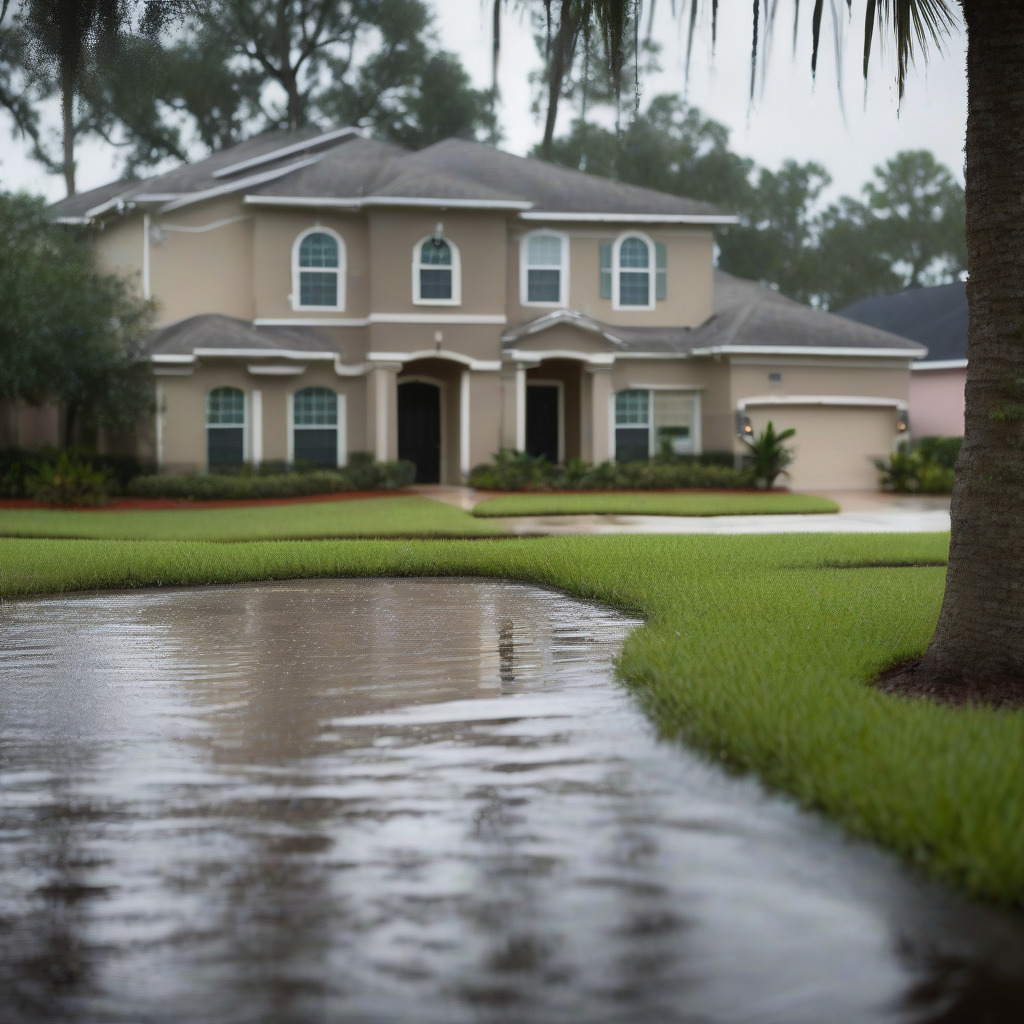
What Orlando Homeowners Need to Know Before Their 4-Point Inspection — and What Fails Most
Citizens takeout letters are arriving. Carriers are requiring inspections on homes they never would have flagged before. Failing one can cost you your policy or tens of thousands in emergency repai…

Citizens takeout letters are arriving. Carriers are requiring inspections on homes they never would have flagged before. Failing one can cost you your policy or tens of thousands in emergency repairs. A system-by-system guide to what inspectors are flagging in Orange County, what it costs to fix, and how much time you have.
Why This Is Landing in Orlando Inboxes Right Now
If you own a home in Orange, Osceola, Seminole, or Lake County and you’ve received a letter telling you a 4-point inspection is required before your homeowners coverage can continue or transfer, you’re not alone. The timing isn’t an accident.
Two forces are reshaping the Orlando insurance market simultaneously. First, Florida’s Citizens Property Insurance depopulation program is in active operation. Under SB 2-A and related legislative pressure, Citizens has been aggressively pushing policyholders toward private takeout carriers since 2022 — insurers that receive state incentives to absorb Citizens customers. Those carriers don’t have to accept everyone. When they pull your file, many are now ordering 4-point inspections as a condition of coverage, even on homes that are 20 or 25 years old, where nobody’s asked for an inspection in years.
Second, it’s hurricane season. Underwriting departments at private carriers tighten their risk criteria between June and November. A carrier that might have offered coverage with minimal documentation in the off-season wants verification now: is the roof in acceptable condition? Is the electrical panel safe? Is the plumbing going to fail catastrophically? The inspection gives them that snapshot — or grounds to decline.
The result: homeowners in Casselberry, Conway, Pine Hills, Azalea Park, and Horizon West are opening mail to find inspection demands on houses they bought five or ten years ago and assumed were well within any “safe” age range. The threshold that used to define who got flagged no longer applies uniformly. Understanding what the inspection covers, what actually causes a home to fail, and what repairs cost locally in 2026 is now practical, urgent information.
What a 4-Point Inspection Actually Is and Who Orders It
A 4-point inspection is not a home inspection. It doesn’t evaluate flooring, windows, appliances, foundation cracks, attic insulation, or the dozens of other items a buyer’s inspector would scrutinize. It’s a narrow underwriting document — a carrier’s way of establishing the age and general condition of four specific systems: roof, electrical, plumbing, and HVAC. The name is literal.
The inspector photographs each system, notes the age and material type, flags visible deficiencies, and submits the report on a carrier-approved form — typically the OIR-B1-1802, which Florida’s Office of Insurance Regulation recognizes as the standard. Some carriers use proprietary versions with slightly different fields, which matters when you’re choosing an inspector.
The inspection is ordered by the insurance carrier, not any government agency. It’s not a safety certification. A “failed” report doesn’t mean your home is unsafe to occupy — it means the insurer has decided it represents a risk they’re unwilling to underwrite at standard terms. That’s all. The language in those letters can feel more alarming than the underlying reality sometimes warrants.
In Orange County, a standalone 4-point inspection typically runs $75 to $175. Several inspection companies bundle it with a wind mitigation inspection for $150 to $250 total — worth pursuing, since a favorable wind mitigation report can reduce your premium enough to offset both costs many times over. The inspector must hold a valid Florida license: licensed home inspectors, general contractors, building contractors, and professional engineers all qualify. Verify through the Florida DBPR portal at myfloridalicense.com before you book anyone.
The Age Threshold Shift and Which Orlando Neighborhoods Are in the Crosshairs
Until roughly 2021 and 2022, the informal industry standard in Florida was that 4-point inspections became a likely requirement when a home hit approximately 30 years of age. A 1999-built house in Lake Nona wasn’t something carriers flagged. A 1985 ranch in Conway definitely was. That threshold has shifted — fast enough that a lot of homeowners haven’t caught up.
Private takeout carriers now operating in the Orlando market — Universal P&C, Slide, Ovation, Heritage, and others — write their own underwriting guidelines, which aren’t set by state statute and vary by company. Several now order inspections on homes as young as 20 years old. Some have issued requirements on homes under 20 when aerial imaging or loss history flags a concern. The housing vintages most squarely in the crosshairs right now are roughly 1975 through 2000.
Pine Hills and the west Orange County corridor built heavily through the late 1970s and 1980s. Concrete block homes that were solid construction for their era are now carrying 40-plus-year-old roofs, original electrical panels, and plumbing systems that predate modern materials standards. Conway, Azalea Park, and the southeast Orange County neighborhoods saw major development from the mid-1970s through the late 1980s — a substantial portion of that housing stock still has its original or first-replacement roof, and some of it was plumbed with polybutylene, which has become the single biggest insurer disqualifier in the market.
Casselberry and Longwood in Seminole County grew heavily during the 1980s and 1990s boom. Homes from that era sit right at the intersection of plumbing risk (polybutylene use peaked in the late 1980s through mid-1990s) and electrical risk — Federal Pacific and Zinsco panels were still common in those years.
Then there’s a group that’s often the most caught off-guard: owners in Horizon West and Lake Nona. These communities didn’t exist in their current form until the mid-2000s. A 2002 or 2004 build in Horizon West is now 21 or 22 years old. If a carrier applies a 20-year threshold, it qualifies for scrutiny. These homeowners have never been through this process and frequently have no idea it’s coming.
System by System: What Orlando Inspectors Are Actually Flagging
Each of the four systems has its own failure patterns — and within each, there’s a meaningful difference between automatic disqualifiers (items that cause an insurer to decline coverage outright) and negotiable deficiencies that may be accepted with documentation or a repair timeline commitment. That distinction determines how you respond and how fast you need to move.
Roof
The roof generates more inspection failures in Central Florida than any other system. Heat, UV exposure, and storm frequency degrade roofing materials faster here than in most U.S. markets. A shingle roof that might last 25 years in North Carolina often shows significant wear at 15 to 17 years in Orlando. If you’ve watched a neighbor replace a roof that looked fine from the street and wondered why — this is why.
Most private carriers in the Orlando market won’t write a policy on a shingle roof older than 15 to 20 years. Some extend to 25 years for concrete tile, which degrades more slowly. Metal roofing — standing seam or corrugated — gets the most favorable treatment and the longest acceptable age thresholds. A second layer of shingles (a re-roof over an existing layer rather than a tear-off replacement) is a hard stop for most carriers. Single layer on a clean deck. No exceptions.
Many 1980s homes in Orange County have additions — Florida rooms, garage conversions, enclosed lanais — that carry a different roof surface, a different age, and sometimes an undetected second layer underneath. Inspectors flag the addition roof separately. If it’s older or structurally compromised, it creates its own problem independent of the main structure. Active leaks, missing or damaged flashing, and visible granule loss are additional flags. Carriers may accept a letter from a licensed roofer attesting the roof has usable life remaining, but when age alone crosses the carrier’s threshold, that’s generally non-negotiable regardless of condition.
For a sense of what full roof replacement actually runs in this market, what Orlando homeowners are actually paying for a new roof in 2026 breaks down contractor quotes and material costs in detail.
Electrical
Electrical failures fall into two categories: automatic hard stops and condition-based concerns.
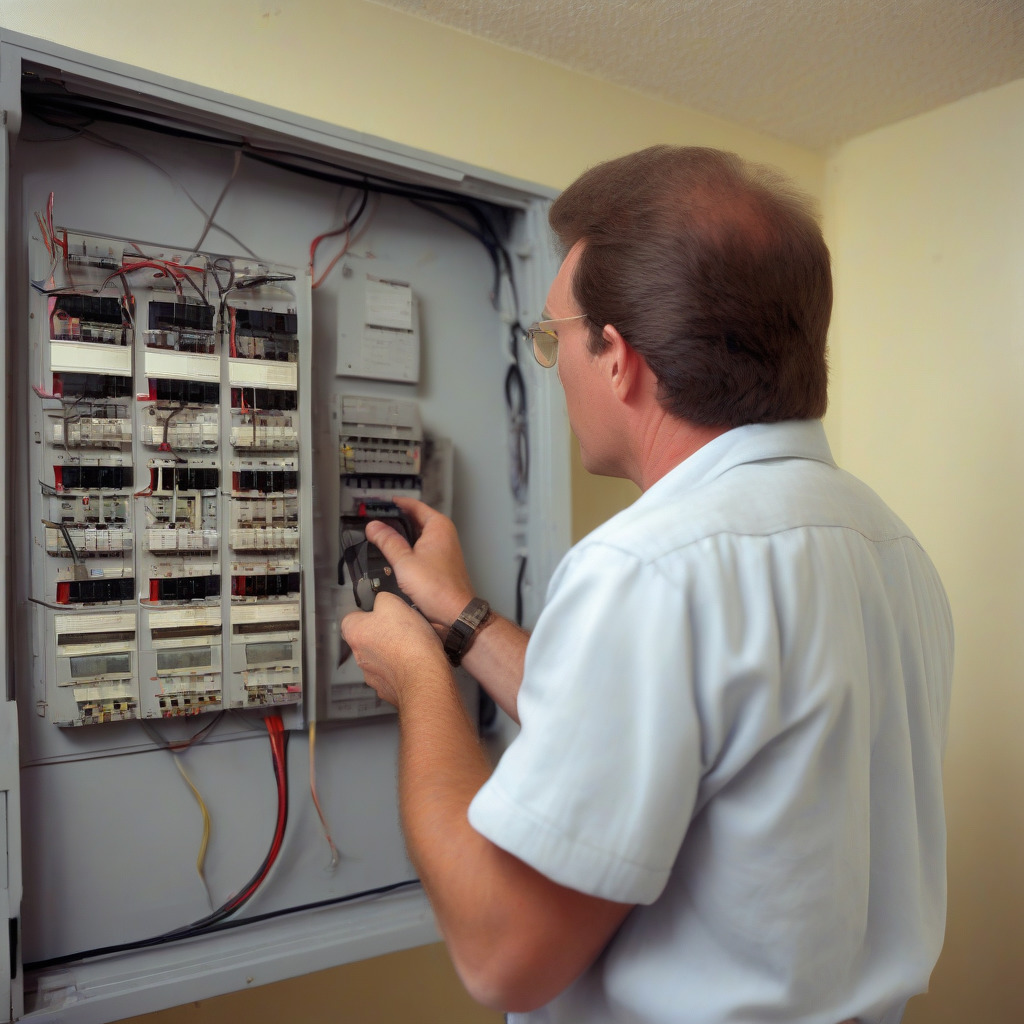
Federal Pacific Electric (FPE) Stab-Lok panels and Zinsco panels (also sold as Sylvania) are hard stops with every active carrier in the Orlando market. No documentation, no letter from an electrician attesting to good condition, no independent inspection changes this. If your home has one of these panels, it needs replacement before coverage can be bound. FPE panels were common in Orange County construction from the late 1950s through the early 1980s. Zinsco ran through roughly the same era. If you have a home built before 1985 and you’ve never had an electrician open the panel, that’s the first thing you should do — before the inspector arrives, before anything else.
Aluminum branch wiring — distinct from aluminum service entrance wiring, which is standard and acceptable — is handled inconsistently. Some carriers will accept it with documentation of proper connections: CO/ALR outlets and switches, anti-oxidant compound on all connections. Others decline it outright. Know which you have before the inspection. Overloaded panels, double-tapped breakers, visible wiring damage, and open junction boxes are negotiable in most cases but require documentation of correction.
Plumbing
Polybutylene pipe is the plumbing equivalent of an FPE panel. If your home has it, most carriers won’t write the policy.
Polybutylene is identifiable by its gray flexible material and by the plastic or copper crimp fittings at connections. It was installed throughout Central Florida from roughly 1978 through 1995 — and the Central Florida market was one of the highest-concentration installation areas in the country during the 1980s building boom. Homes in Pine Hills, Conway, Casselberry, and dozens of other Orange and Seminole County neighborhoods have a meaningful probability of containing it.
Here’s the complication: it’s often only partially visible. You may see it under sinks or at the water heater connection, but the supply lines run through walls and under slabs where inspectors can’t reach. Inspectors note what they can see. A full assessment typically requires a licensed plumber. Galvanized steel pipe in older homes — found in Parramore, historic downtown corridors, and other early-build neighborhoods — is a separate concern; corrosion and reduced flow are the typical flags, and carriers will often accept partial repipe documentation or water quality testing results.
Copper plumbing is generally well-received. CPVC and PVC are acceptable to most carriers. If you have copper and good water pressure, the plumbing portion of your 4-point is usually the easiest section. Cast iron drain lines in 1960s and 1970s homes present a secondary concern — corrosion and root intrusion — and a sewer scope is sometimes requested as a follow-up when cast iron is identified.
HVAC
The HVAC section is the most straightforward of the four — primarily an age question. But there’s an Orlando-specific wrinkle worth understanding.
Most carriers accept HVAC systems up to 15 years old without concern. At 15 to 20 years, some require documentation of recent service and a technician’s written attestation that the unit has remaining useful life. Beyond 20 years, most carriers consider the system at end of life and flag it.
A 15-year-old central air system in Central Florida has run continuously for the equivalent of roughly 20 years of operation in a cooler northern market. The cooling season here runs 9 to 10 months. Compressors, coils, and air handlers log operating hours year-round in a way that simply doesn’t happen in Chicago or Atlanta. Carriers with Florida-specific underwriting experience scrutinize system age more closely as a result — actual wear matters, not just the calendar year on the data plate.
Beyond age, inspectors flag disconnected or deteriorating ductwork, refrigerant leaks, non-functioning condensate drain lines, and evidence of improper previous repair. These are negotiable with documentation. A completely inoperable unit — or a missing one — is a hard stop.
What Remediation Actually Costs in the Orlando Market in 2026
These are the figures that matter most, and they’re the ones you almost never find in insurance coverage articles. All figures below are current to mid-2026 for Orange County and the surrounding market. They reflect licensed, permitted work — not handyman repairs or unpermitted fixes, which carriers won’t accept.
Panel replacement (FPE or Zinsco, replaced with a code-compliant modern panel): $3,500 to $6,500 in Orange County, including permit, inspection, and utility coordination. The range reflects panel amperage, service entrance wiring condition, and whether the work requires a service upgrade from Duke Energy or OUC. Budget toward the higher end for pre-1980 homes, because service entrance work is frequently discovered to need replacement once the panel is opened. The permit and inspection process adds 1 to 3 weeks to the timeline — which matters considerably inside a 60-day cure window.
Whole-house repipe (polybutylene supply lines removed, replaced with CPVC or PEX): $4,000 to $9,000 for a standard 3-bedroom, 2-bath single-family home. Variables include slab versus pier-and-beam construction, linear footage, and wall access complexity. Orange County CBS homes on slab are at the lower end when walls are accessible; slab penetrations push prices toward the high end. Expect the permit and final inspection to add 1 to 3 weeks. Repipe work typically requires drywall patching and painting in multiple rooms — costs often not included in the plumbing contract. Ask before you sign anything.
Roof replacement: The most variable line item, because material choice drives cost dramatically. Architectural shingle runs $12,000 to $22,000 for a typical 1,500 to 2,000 square foot footprint, full tear-off and replacement. Concrete tile — common in Dr. Phillips, Windermere, and Hunter’s Creek — costs $20,000 to $40,000 for comparable coverage, reflecting higher material cost and the structural load assessment often required. Standing seam metal runs $25,000 to $45,000 for a whole-house system. Post-hurricane demand has kept roofing prices volatile. Get quotes from at least two or three licensed Orange County roofing contractors. The spread between bids can be significant.
HVAC replacement (standard split system for a 1,500 to 2,200 square foot home): $6,000 to $12,000 installed, including removal of the old system, refrigerant handling, and permit. Variable speed and high-SEER units sit at the upper end. Multi-zone systems run considerably higher.
Orange County’s permitting office processes most residential mechanical, electrical, and plumbing permits within approximately 1 to 3 weeks for straightforward scope. Re-inspection if there are issues and final sign-off add additional time. A 60-day cure window sounds substantial — until contractor scheduling in a busy summer market consumes the first two weeks before work even begins. If your inspection comes back with failures, call licensed contractors the same week. Not after you’ve spent a month reading about it.
Carrier by Carrier: Who Has the Strictest Requirements Right Now
The private carriers operating in the Orlando Citizens takeout market each write their own underwriting guidelines. These aren’t set by the state, aren’t publicly filed in a standardized consumer-readable format, and can change without notice. What follows reflects what is publicly known and agent-reported as of 2026. Verify with a licensed Florida agent before making any financial decision — this is context, not a final answer.
Universal Property & Casualty is one of the largest and most active takeout carriers in the Florida market. Universal requires 4-point inspections on homes 20 or more years old, with roof age as the primary screening factor. FPE, Zinsco, and polybutylene are hard stops. Universal also uses aerial imaging services to score roof conditions before an inspector arrives — meaning your roof may have already been evaluated before you receive an inspection request.
Slide Insurance has been a significant Citizens takeout participant. Guidelines include inspection requirements on homes approaching 20 years of age with particular scrutiny of electrical systems. Aluminum branch wiring and FPE/Zinsco panels are hard stops. Verify Slide’s current writing activity in Orange County with a local agent, as carrier participation in specific counties shifts.
Ovation Home Insurance Exchange is a newer participant taking on Citizens policies in the Orlando metro. Their underwriting specifics are less publicly documented than more established carriers, and requirements have varied enough by property that agent verification matters more here than with the others.
Heritage Property & Casualty has been active in the Central Florida market with hard-stop positions on FPE, Zinsco, and polybutylene consistent with the broader market. Heritage’s current market status and financial condition in Orange County should be confirmed through the Florida Office of Insurance Regulation (floir.com) before relying on them as a coverage option.
Citizens itself applies inspection requirements during depopulation and for renewals, with the historical trigger for standard residential policies at approximately 30 years of age. But inspection requirements during takeout processing can differ from renewal requirements — and if you decline a takeout offer from a private carrier, Citizens is required to retain you, but will then run its own eligibility review. If your home doesn’t meet Citizens’ underwriting criteria, it may issue its own non-renewal. Declining a takeout offer is not a guaranteed safe harbor. A lot of homeowners assume it is. That assumption has cost some of them.
If Citizens ultimately doesn’t renew your policy and private carriers decline based on the same inspection findings, the remaining option is the surplus lines market. Non-admitted carriers will write more difficult risks — at significantly higher premiums and with higher deductibles than standard market coverage. For broader context on what’s driving Florida property insurance rate increases and what they mean for you, that picture extends well beyond the 4-point process alone.
If Your Home Fails: Grace Periods, Cure Windows, and What Happens to Coverage
The question Orlando homeowners ask most urgently after a failed inspection: do I have time to fix this before I lose my coverage?
Honest answer: it depends on what action the carrier takes, and the timeline is shorter than most people expect.
Florida statute generally requires at least 45 days’ notice before mid-term cancellation of a homeowners policy. Non-renewal notices at the end of a policy term require at least 120 days for policies in force more than 90 days. These are minimums, and most carriers provide exactly the minimum. Verify current requirements with a licensed Florida attorney or agent — post-2023 legislative changes may affect specific notice rules.
If a failed inspection triggers a mid-term action — which is more likely when a takeout carrier discovers an issue during initial acceptance — you may have as few as 45 days from the notice date to fix the problem, provide documentation that work is underway, or find alternative coverage. Many carriers will grant a 30-to-90-day cure window tied specifically to the inspection failure, with coverage remaining in force on the condition that you provide evidence of remediation: a completed permit and final inspection sign-off, or a licensed contractor’s written commitment and an active permit number. Get that permit pulled as soon as you have a contractor selected. The permit number itself often satisfies the carrier’s interim requirement — it buys you the time to complete the work.
Start your cure window clock from the day you receive the failed inspection report, not the day the formal notice arrives. Contractor availability in Orlando’s summer market is constrained. The longer you wait, the more likely you run out of time before the permit is finaled. This is where people actually get hurt — not because the problem was unfixable, but because they waited three weeks to make calls.
How to Prepare Before the Inspector Shows Up
You can’t stop a carrier from ordering an inspection. You can prevent surprises — and in some cases, resolve issues before the inspector arrives, which is far better than fixing them after a failed report is already in the carrier’s file.
Open your breaker box and photograph the brand name on the panel. If you see “Federal Pacific,” “Stab-Lok,” “Zinsco,” or “Sylvania,” call a licensed electrician before the inspection is scheduled. Don’t wait to see if the inspector notes it. They will, and so will every carrier.
Look under all sinks, at the water heater connections, and at any visible supply lines in the garage or utility areas. Gray flexible plastic pipe with plastic or copper crimp fittings is polybutylene. If you see it in one location, assume it runs throughout the house until a plumber tells you otherwise.
Pull your roof permit history through Orange County’s building and permitting records. The permit will show the date of the most recent roof installation and the contractor. If you can’t find a permit — which happens with re-roofs done in the 1990s — a roofer can often determine age from manufacturer codes on ridge cap shingles. Know your roof age before the inspector does.
Find the service tag or data plate on your air handler and exterior compressor. Manufacture date is encoded in the serial number, typically in a two-digit year format in the first or last four digits. If you have service records from a licensed HVAC contractor, pull them. A recent tune-up receipt helps document a maintained system.
One thing that surprises a lot of homeowners: carriers using aerial imaging services like EagleView or Cape Analytics may have already scored your roof condition before an inspector sets foot on your property. These services flag roofs showing visible granule loss, aging shingles, or structural issues from satellite imagery. If a carrier has already flagged your roof this way, the ground-level inspection is confirmatory. There’s no element of surprise working in your favor.
When you schedule your 4-point, ask for a wind mitigation inspection at the same time. The combined cost is modestly higher than a standalone 4-point. A favorable wind mitigation report — confirming hip roof geometry, rated opening protection, or other qualifying features — can generate a meaningful premium discount that more than offsets both inspection costs. For a fuller look at what Orlando homeowners are actually paying for property insurance in 2026, including how wind mitigation credits show up in premiums, our home & property coverage tracks verified quotes across the metro.
How to Find a Licensed Inspector in Orange County and What to Ask
Several inspection companies are active in the Orlando metro performing 4-point inspections. Names you’ll encounter in local referral networks include Waypoint Property Inspection, AmeriSpec of Orlando, HomeTeam Inspection Service, and Inspect360. Independent licensed inspectors operating under their own general contractor or home inspector licenses are also an option. Pricing in the current market runs $75 to $175 for a standalone 4-point and $150 to $250 bundled with wind mitigation.
Before booking, verify licensing through the Florida DBPR portal at myfloridalicense.com. A 4-point inspection must be performed by a licensed home inspector, Florida-licensed general contractor, building contractor, professional engineer, or registered architect. Unlicensed inspections aren’t accepted by carriers — and there are people in this market offering cheap inspections on expired or improper license types. Not many, but they exist.
When contacting inspectors, ask whether their report uses the OIR-B1-1802 form and whether they have experience with proprietary forms used by specific carriers. Some carriers require different fields or photo specifications. An inspector familiar with those formats avoids the delay of a re-submission. Ask about turnaround time on the report as well. In a cure-window situation, 3 to 5 business days is acceptable. Ten days is not. Clarify this before booking.
A good inspector will clearly document the limits of what was inspectable — visible plumbing versus behind-wall lines, accessible attic space versus sealed areas. Vague reports create carrier follow-up and delays. When you speak to the inspector beforehand, ask what happens if you disagree with a finding. A reputable one will walk you through their observations and explain what they saw. They can’t change factual findings — if they saw gray pipe under the sink, it’s in the report. But the explanation matters for understanding what you’re actually dealing with.
One important distinction: the inspector documents what’s there. They’re not an advocate for your coverage continuation. If you disagree with a specific finding, the recourse is documentation — a second opinion from a licensed contractor, a letter from a plumber or electrician attesting to the system’s actual condition, or evidence the inspector misidentified a material. Carriers do accept correction documentation, but the burden is on you, and it needs licensed contractor credentials behind it.
The private market’s tightening of age thresholds, combined with Citizens’ active depopulation push, has moved 4-point inspections into the lives of homeowners who bought relatively modern homes and assumed they were in the clear. Knowing what your four systems look like before an inspector does — and knowing what repairs actually cost in this market — is the difference between managing this on your own timeline and scrambling inside a 45-day window during the busiest contractor season of the year.
For more local coverage, explore our Home & Property section.